
Eating disorders are serious, treatable mental health conditions, but they’re surrounded by misconceptions that keep people from recognizing symptoms and getting help. Eating disorders are not choices, do not have a “look,” affect people of every background, and respond well to treatment, especially when it starts early.
Here are five of the most common myths, and what the evidence says instead.
Myth 1: Eating disorders are a choice or a matter of vanity.
The reality: Eating disorders are complex illnesses driven by a combination of biology, psychology, and environment.
Eating disorders aren’t a choice, and they’re not caused by a lack of willpower. Research on families, twins, and adopted children shows that genetics play an important role in eating disorder risk. Other factors can contribute, too, including temperament, anxiety or depression, trauma, and cultural pressures around food, weight, and appearance.
Dieting is one of the most studied risk factors. In a landmark Australian study, dieting was the strongest predictor of developing a new eating disorder, and girls who dieted severely were about 18 times more likely to develop one than girls who didn’t. Additionally, a US study that followed girls for eight years found dieting predicted eating disorders even among girls who felt satisfied with their bodies. In short, eating disorders are complex illnesses with many contributing factors. No one chooses to develop one, and willpower alone can’t fix it.
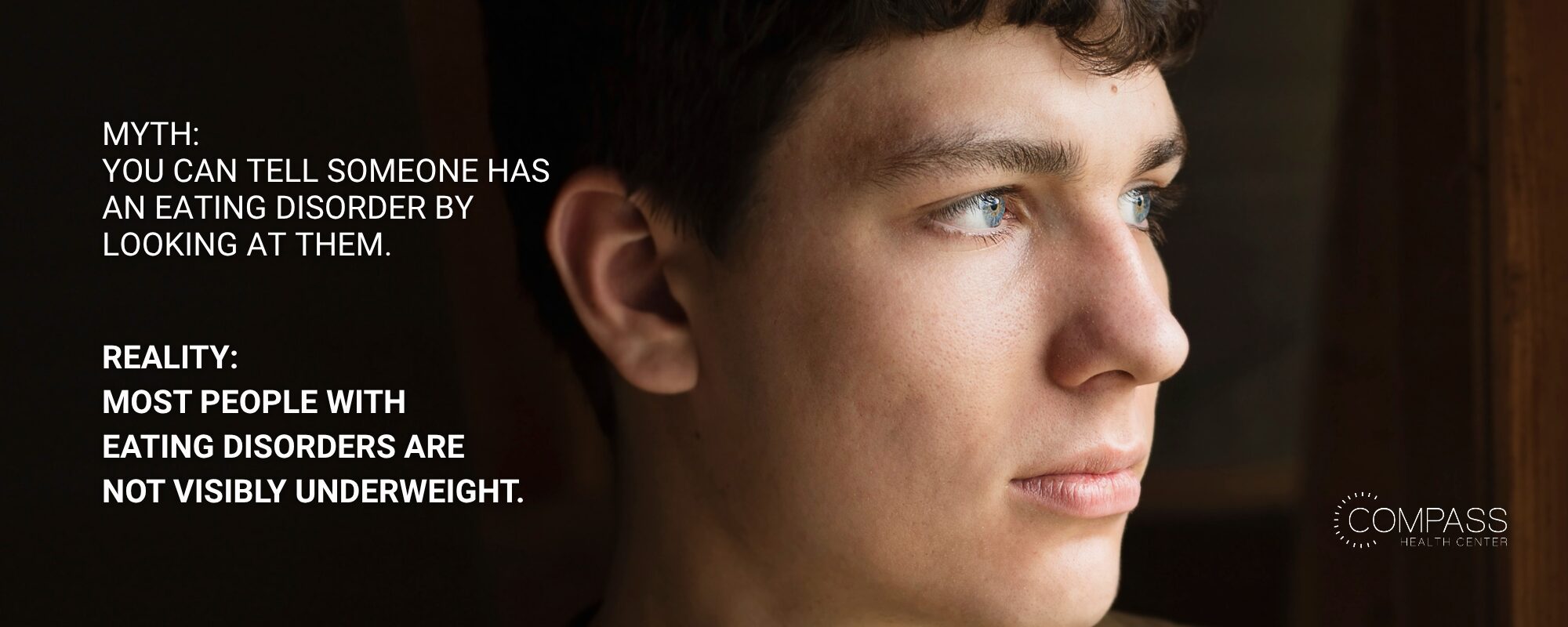
Myth 2: You can tell someone has an eating disorder by looking at them.
The reality: Most people with eating disorders are not visibly underweight.
Eating disorders can affect people at any body size. Atypical anorexia, for example, involves the same symptoms as anorexia but occurs in people who aren’t underweight, and it can be just as medically serious. Research has found similar rates of dangerously slow heart rates (bradycardia) in people with atypical and typical anorexia, and rapid weight loss can be a sign of medical risk at any size.
That’s why waiting for someone to “look sick” can delay important care. What someone is doing and experiencing matters more than their appearance. Signs can include skipping meals, following rigid food rules, becoming preoccupied with weight or body shape, frequently going to the bathroom after eating, or avoiding social activities that involve food.
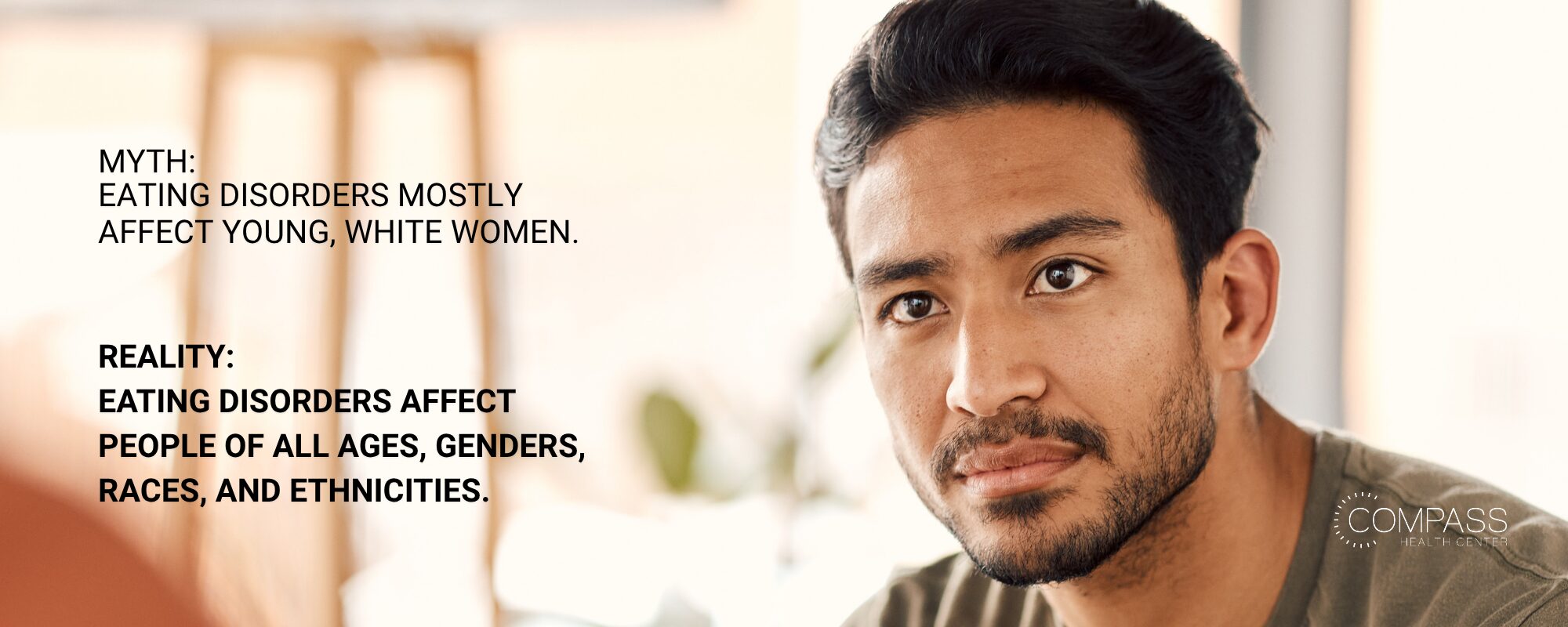
Myth 3: Eating disorders mostly affect white, female teens.
The reality: Eating disorders affect people of all ages, genders, races, and ethnicities.
Eating disorders can affect anyone regardless of age, race, gender, or sexual orientation. In a nationally representative U.S. survey, about 3.5% of women and 2% of men reported having binge eating disorder at some point in their lives. Eating disorders can occur from childhood through older adulthood. Surveys have found eating disorders at broadly similar rates across racial and ethnic groups, and yet people of color are less likely to get help.
These gaps, along with common stereotypes about what an eating disorder “looks like,” can leave many people feeling like their experience isn’t serious enough to count. But if you’re struggling, your experience is real—and you deserve support and care.
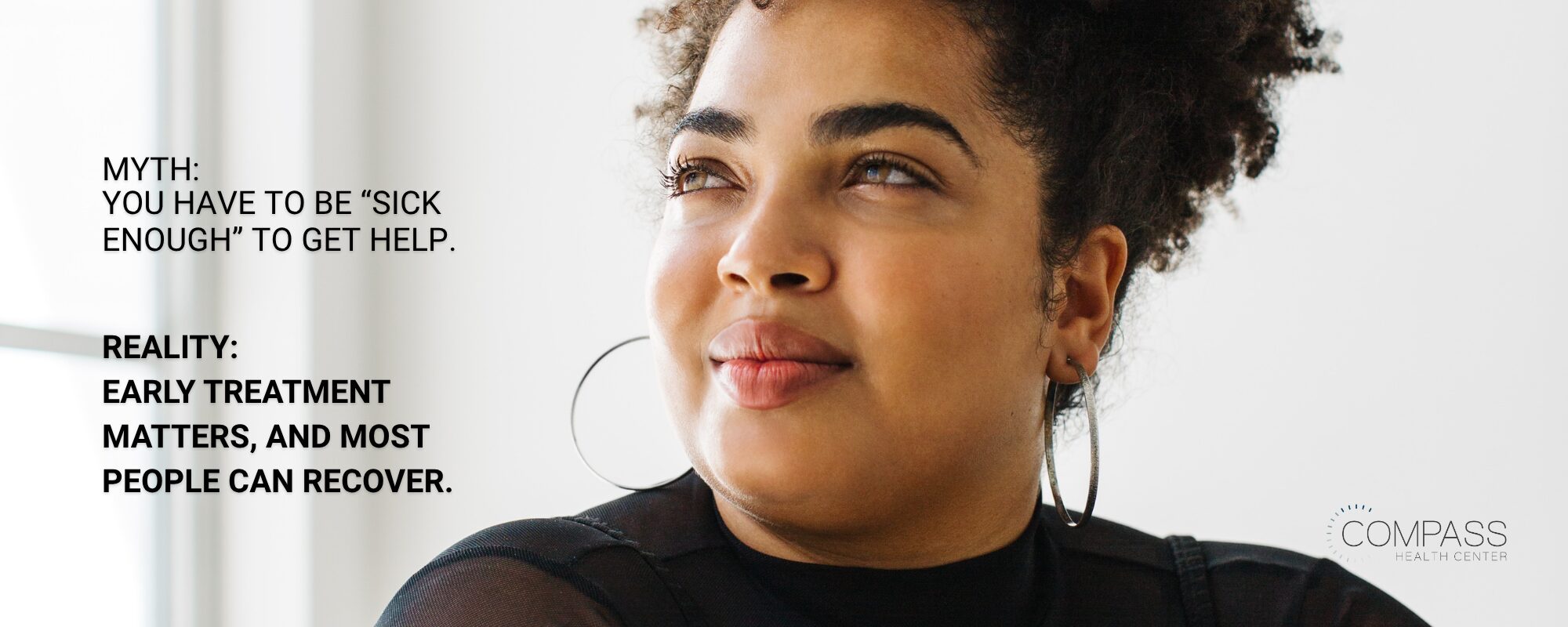
Myth 4: You have to be “sick enough” to get help, and recovery isn’t realistic anyway.
The reality: Early treatment matters, and most people can recover.
Many people with eating disorders wait to seek help—in the national survey mentioned above, fewer than half had ever received treatment specifically for their eating disorder. But getting support sooner can make a difference, particularly with anorexia, where recovery can become more difficult the longer the illness continues.
The good news is that recovery is possible: in a 22-year follow-up study, about 63% of women with anorexia and 68% of women with bulimia had recovered, and roughly half of those with anorexia who hadn’t recovered by year nine went on to recover later. Recovery doesn’t always happen in a straight line, and you don’t have to wait until things reach a crisis point to ask for help. You deserve support now.
Myth 5: Effective eating disorder treatment requires leaving home for residential care.
The reality: Eating disorder care exists on a continuum, and many people do well in outpatient and virtual programs.
Eating disorder treatment can range from weekly outpatient therapy to more structured programs, including intensive outpatient, partial hospitalization, residential, or inpatient care. The right level of care depends on a person’s medical needs, symptom severity, risk and protective factors, and the level of structure and support they require. Early research suggests virtual care is a promising option, especially because it can reduce barriers like travel and time away from school, work, or family.
Get Support for an Eating Disorder in Illinois
If you or someone you love is showing signs of an eating disorder, you don’t have to wait for things to get worse. Compass Health Center offers a virtual eating disorder treatment program for Illinois residents, with both partial hospitalization (PHP) and intensive outpatient (IOP) levels of care. Our team provides evidence-based, whole-person care from the comfort of home, with licensed clinicians and a registered dietitian on every treatment team.
Call 877-492-0170 or request an assessment online to talk with our team about next steps.
If you or someone you know is in crisis, call or text the 988 Suicide & Crisis Lifeline or go to the nearest emergency room.