
You Only Know What You Know: A Parenting & Mental Health Podcast
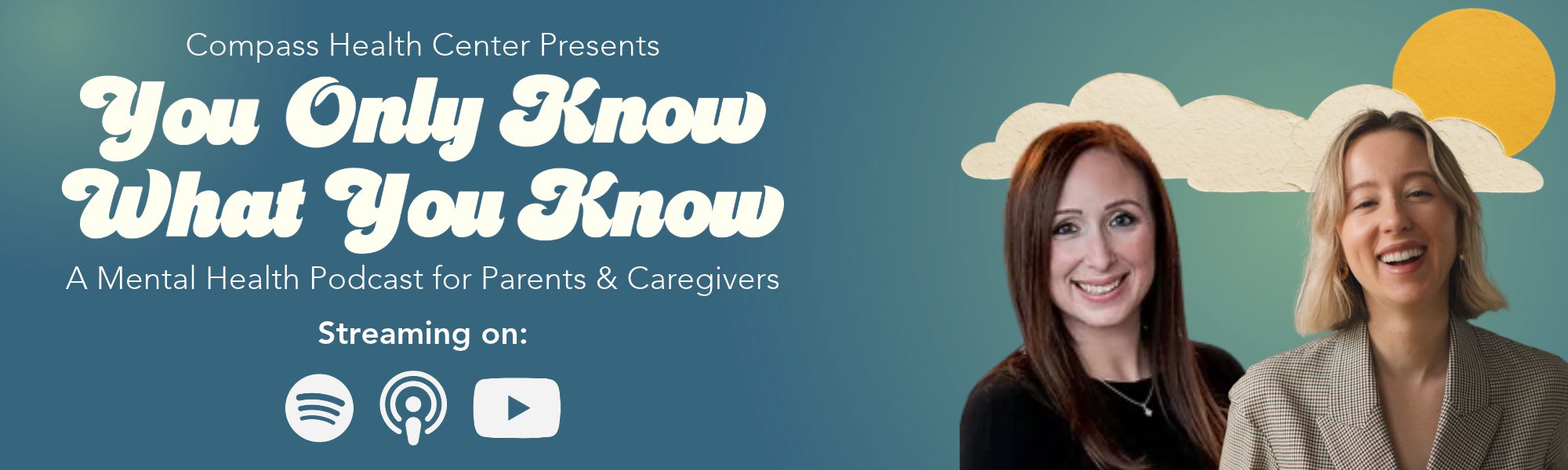
You Only Know What You Know is a parenting and mental health podcast from Compass Health Center, hosted by clinician and parent Beth Hope, LCSW, and journalist-turned-brand voice expert and parent Britt Teasdale. Grounded in the idea that our understanding is shaped by what we’ve been taught—or not taught—the series breaks down stigma, shares expert and lived perspectives, and offers the kind of guidance parents often wish they had sooner. Through honest conversations with clinicians, caregivers, and storytellers, each episode delivers insights to help families navigate the complex emotional world of raising children, teens, and young adults today.
Introducing You Only Know What You Know — A Mental Health Podcast for Parents
You Only Know What You Know is a parenting and mental health podcast for caregivers navigating the messy, meaningful realities of raising kids and teens. Hosted by Beth Hope, LCSW, and Britt Teasdale, the show blends clinical expertise with lived experience to explore topics like child and teen anxiety, OCD, digital overwhelm, and family stress—without panic or shame. Produced by Compass Health Center.
You Only Know What You Know — Episode 1A Meet Your Hosts & Meet the Podcast
In this introductory episode, hosts Beth Hope, LCSW, and Britt Teasdale share why You Only Know What You Know exists and the heart behind the podcast. Drawing from their professional backgrounds and personal experiences as parents, they explore the gap between understanding mental health and applying that knowledge in everyday family life.
This episode sets the tone for the season with honest conversations, trusted insight, and reassurance for parents navigating child and teen mental health—without panic, perfectionism, or shame.
You Only Know What You Know | Teen Mental Health 101 featuring Dr. David Schreiber and Dr. Claudia Welke
In this episode, hosts Beth Hope, LCSW, and Britt Teasdale are joined by Compass Health Center co-founders and psychiatrists Dr. David Schreiber and Dr. Claudia Welke for a grounded conversation about teen mental health.
Together, they explore what today’s teens are really struggling with—from chronic overwhelm to emotional dysregulation—and help parents better understand what’s typical, what may be concerning, and when to seek support. Drawing on decades of clinical experience and their own perspectives as parents, David and Claudia offer clarity without alarm and guidance without fear-based messaging.
This episode answers the questions parents are asking every day, offering reassurance, perspective, and practical insight—and a reminder that staying curious and showing up matter more than having all the answers.
You Only Know What You Know | Screens, Scrolls, and Stress: Finding Digital Balance featuring Dr. Rachael Levine, Ph.D., LCP
Screens are everywhere — in our homes, our schools, and our children’s social lives. For many parents and caregivers, the challenge isn’t whether screens should be part of daily life, but how to help kids build a healthy relationship with technology.
In this conversation, Beth Hope and Britt Teasdale sit down with Dr. Rachael Levine, Ph.D., LCP, the Director of Young Child Programs & Center of Excellence at Compass Health Center, to move the conversation away from fear and toward clarity.
Together, they explore what we know about screen use, why it’s so hard for kids (and adults) to unplug, and how families can focus less on perfect limits and more on balance, awareness, and connection.
You Only Know What You Know Podcast | When School Feels Impossible: The Why Behind School Anxiety, Avoidance, and Burnout featuring Adam Honecker, LCSW
For many families, school anxiety doesn’t show up all at once. It may begin with a few difficult mornings, a stomachache before class, or a request to stay home “just this once.” Over time, those moments can grow into patterns of avoidance, anxiety, and stress that affect the entire family.
In this episode, Beth and Britt sit down with Adam Honecker, LCSW, Director of Compass Health Center’s Adolescent PHP and IOP Programs in Chicago, to explore what’s happening beneath the surface when school starts to feel impossible. Together, they unpack the different reasons kids and teens may avoid school — including anxiety, social pressure, perfectionism, burnout, and the need for safety and connection — and how parents can begin to respond with understanding instead of fear.
Throughout the conversation, they discuss how school avoidance can show up differently across ages, why physical symptoms like headaches and stomachaches are often part of the picture, and practical ways families can support their child while building resilience and maintaining their own mental health.
You Only Know What You Know | They’re Legally an Adult. You’re Still Their Parent. featuring Melissa Blitz, M.Ed., LCPC and Greta Holt, LCSW
When your child turns 18, the relationship changes overnight — on paper. They’re legally an adult. They can make their own decisions. And yet, the worry, responsibility, and desire to help doesn’t disappear.
In this episode, Beth and Britt sit down with Melissa Blitz, M.Ed., LCPC, Director, Center of Excellence and Greta Holt, LCSW, Principal Family Therapist, to explore what it means to parent at the edge of autonomy when a young adult is struggling with their mental health. Together, they talk about how to stay connected without overstepping, how to express concern without damaging trust, and what support looks like when you’re no longer in control of the decisions.
The conversation also addresses a growing concern many families describe as “failure to launch.” Listeners will hear why today’s path to independence often looks different than it did in previous generations.
Parenting a Child with OCD: Family Life, Siblings, and Turning Down the Volume
Episode Overview To many people, the word “accommodation” can sound clinical, but it actually describes something deeply human—like a parent watching their child suffer and doing whatever it takes to make that pain stop. Rearranging the house, answering...
The Myth of Doing it All: Understanding the Mental Load of Parental Burnout
Episode Description Parenting has never been easy, but today’s parents are carrying more than ever before—and the weight is palpable. In this episode of You Only Know What You Know, hosts...
Understanding Psychiatric Medication: What Parents Should Know About Supporting Kids and Teens
For many parents, one of the most difficult questions in their child’s mental health journey is whether medication should be part of the treatment plan. It’s a decision that often...
10 Years After Losing My Sister, NASCAR Racer Kat Teasdale
Remembering my sister beyond her suicide and reflecting on grief and suicide loss during Suicide Prevention Month When I think about my eldest sister, Kat, I remember her huge brown...
Suicide Prevention Awareness, Part 2: How Parents Can Recognize the Signs and Respond with Confidence
Talking with a child or teen about suicide is one of the hardest conversations a parent will ever have, and one many parents put off out of fear of saying...
Who Am I Becoming? Identity, Self-Concept, and Mental Health in Childhood & Adolescence
Episode Description Kids and teens are figuring out who they are while juggling friendships, school, social media, and family expectations. In this episode, hosts Beth Hope, LCSW, and Britt Teasdale...