

Care for the Years That Shape Us
Support for Children, Teens, and the Families Who Love Them
When your child is struggling, it rarely feels small. Maybe it’s anxiety that’s growing louder. Mood changes that don’t settle. School refusal. Withdrawal. Escalating conflict at home.
You may be asking yourself: Is this typical? Is this a phase? Or does my child need more than weekly therapy? If you’re here, something doesn’t feel right — and that feeling matters. You know your child best.
Compass Health Center provides individualized, psychiatrist-led Partial Hospitalization (PHP) and Intensive Outpatient (IOP) programs for families who need more support than traditional outpatient care, without requiring inpatient hospitalization.
We care for young people and the families figuring it out beside them.

When to Consider More Than Weekly Therapy
It may be time to explore a higher level of care if your child or teen is:
- Missing school due to anxiety, depression, or emotional distress
- Experiencing panic attacks, intrusive thoughts, or obsessive behaviors
- Withdrawing socially or isolating
- Showing escalating mood swings or irritability
- Engaging in unsafe behaviors
- Stuck in patterns that aren’t improving despite outpatient therapy
Early, specialized intervention can meaningfully influence long-term functioning. It is not “too late.” It is not “just a phase.”

What Makes Compass Different
Psychiatrist-Led, Multidisciplinary Care
Compass programs are psychiatrist-led and delivered by a multidisciplinary team that may include therapists, experiential clinicians, family specialists, and education specialists. Treatment decisions are made collaboratively with the child, their family, and the full treatment team.
Age-Specific Programming
A five-year-old does not process anxiety the way a sixteen-year-old does.
A teen does not experience depression the way a young adult does.
We intentionally separate programs by developmental stage to ensure that treatment is relevant, appropriate, and effective.
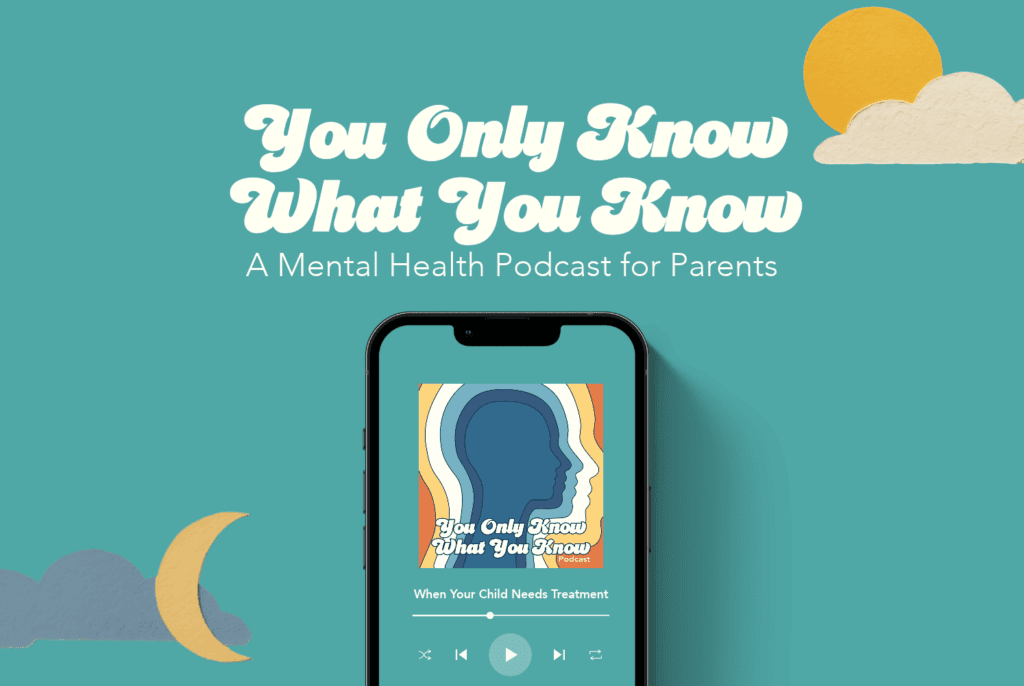
Listen to Our Podcast
Tune in to You Only Know What You Know, where we talk candidly about the mental health topics families navigate every day, from stress and anxiety to big transitions and knowing when to reach out for more support. Each episode offers practical insight to help you understand what your child or loved one may be experiencing and how to show up for them. Helpful topics include:
- The Myth of Doing it All: Understanding the Mental Load of Parental Burnout featuring Heather Katz, LCSW
- When School Feels Impossible: The Why Behind School Anxiety, Avoidance, and Burnout featuring Adam Honecker, LCSW
- They’re Legally an Adult. You’re Still Their Parent featuring Melissa Blitz, M.Ed., LCPC and Greta Holt, LCSW
- When Your Child Needs Mental Health Treatment: Navigating School Along the Way featuring Sarah Pritz Shields, M.Ed and Toni Boos, PsyD
How Treatment Works at Compass
When anxiety, depression, or focus struggles make daily life feel overwhelming, it doesn’t mean you’re failing. It means you’re carrying a lot—often caught between what’s already happened and what comes next. Our programs offer evidence-based care for young adults, grounded in research and shaped by real life.
Parents often carry a quiet weight: uncertainty, self-doubt, and the sense that they should know how to fix what is happening. Parent groups provide space to learn skills, ask questions, and hear from others navigating similar challenges. These conversations often bring relief as much as information.
Recreation therapy at Compass Health Center is an evidence-based treatment modality that uses structured recreational and experiential activities to support mental health recovery and skill development. Led by trained recreation therapists, these sessions focus on improving emotional regulation, social skills, stress management, and overall well-being through activities such as movement, games, creative expression, and mindfulness-based exercises. Recreational therapy availability varies by program and location.
Understanding Levels of Care

Partial Hospitalization Program (PHP)
Our PHP provides structured, hospital-level support in a community setting.
Schedule: Monday–Friday | Approximately 6 hours per day
PHP is often appropriate when:
- Symptoms are significantly interfering with daily functioning
- Weekly therapy has not been enough
- Emotional or behavioral patterns are escalating
- A child or teen needs daily therapeutic structure
Patients return home each evening — remaining connected to family while receiving intensive support.

After-School & Daytime Intensive Outpatient Program (IOP)
IOP, offered during the day and after school, provides structured support several days per week while allowing children and teens to remain engaged in school and family life.
IOP is often appropriate when:
- A child needs more than weekly therapy
- They are transitioning down from PHP
- They need structured skill-building and psychiatric oversight

Inclusive, Group-Based Treatment
All Compass programs are intentionally age-based and group-based. Why?
Because children and teens benefit from learning and practicing skills alongside peers who are navigating similar developmental stages and experiences.
In group treatment, they:
- Practice skills in real time
- Experience peer connection
- Reduce shame and isolation
- Build confidence and social awareness
- Learn that they are not the only one
Group therapy becomes a space for practicing new patterns — safely and with support.

Family Involvement Is Not an Add-On — It’s Essential
Parents and caregivers will not sit on the perimeter of your child’s treatment. You will be part of it.
Parents and caregivers receive:
- Program specific parent orientation
- Regular clinical updates
- Family therapy sessions
- Skills coaching and education
- Clear communication about progress and goals
Our goal is not just stabilization for the child, but strengthening the entire system around them.
Our Treatment Programs
Specialized, Age-Specific Mental Health Treatment
Compass Health Center in Chicago specializes in comprehensive behavioral health care for individuals living with trauma, OCD, depression, anxiety, mental health and substance use, as well as other mental health conditions that affect daily life. Our mental health services are developed specifically for the unique needs of the following age groups:

Child Programs
(5-13)

Teen Programs
(13-18)

Young Adult Programs
(18-23)
Specialties

Insurance & Payment
Compass Health Center is in-network with all major commercial insurance providers, including:
- Blue Cross Blue Shield, Aetna PPO, Cigna, Humana, Compsych, HMOI, University of Chicago
- Our Utilization Review team works directly with insurance companies to obtain authorization and demonstrate medical necessity.
- If you carry out-of-network benefits, our team will assist with claims submission.
- Your privacy and confidentiality are protected at every stage. Compass is Joint Commission accredited and fully HIPAA compliant.
FREQUENTLY ASKED QUESTIONS
No. Families can reach out to Compass directly. Our team will listen, ask a few questions about what your child is experiencing, and help determine whether our programs may be a good fit.
School continuity is an important part of treatment. Compass programs include embedded teachers who help students stay connected to their schoolwork while they are in care. We also work closely with families and schools to plan a thoughtful return to the classroom when treatment is complete.
Children and teens participate in a structured schedule that includes evidence-based therapy, skill-building groups, academic support, and opportunities to practice new coping strategies in real time. Treatment is designed to feel supportive and engaging while helping young people build skills they can use in everyday life.
No. Care at Compass is individualized for each patient. Treatment plans are built around your child’s specific symptoms, developmental stage, family dynamics, and goals. Our team continually adjusts the approach based on how your child is responding.
Not always. Our after-school Intensive Outpatient Programs (IOP) allow many children and teens to attend school during the day while receiving structured mental health support in the afternoon or evening.
Parents play an important role in the process. Families participate in regular sessions with the care team and receive guidance on how to support their child at home so new skills carry into everyday life.
Yes. Compass programs are intentionally age-based and group-based, allowing children and teens to connect with peers who understand what they’re going through. This helps reduce isolation and creates opportunities to practice skills in real time.
Creating a safe and supportive environment is a priority. Some locations offer identity-affirming groups and spaces, including BIPOC and gender and sexuality groups, where young people can connect with others who share similar experiences.
Yes. Compass has expanded programming for younger children through our Center of Excellence in Child Development, led by Dr. Rachael Levine. These programs are designed specifically for younger developmental stages.
You Don’t Have to Decide Alone
If you’re wondering whether this is the right step, we can help you think it through. You don’t need to be certain. You only need to start the conversation.
Our Impact
We understand that success can look different for everyone depending on your hopes and needs. Here are a few ways we define success:
95%
of patients step down to a lower level of care after treatment
99%
would refer a family member or friend
97%
of patients choose to start a program the same day or next day
90%
of patients maintain progress, not requiring higher care levels for 12+ months post-treatment

A life I never thought possible.

I felt very safe and listened to in this program. I felt like I could be my authentic self and I wouldn't be judged for it.

They gave me hope again.

Having never gone through something like this…the process was simple and you never felt like you did something wrong (as a parent). You felt like part of the team trying to do what is best for your child.

My child is leaving Compass more equipped to handle her emotions, her anxiety, her depression, and the things that all trigger these. She is willing to use the skills, which is a huge change, and this is all due to how well Compass worked for her.

I trusted my entire team.