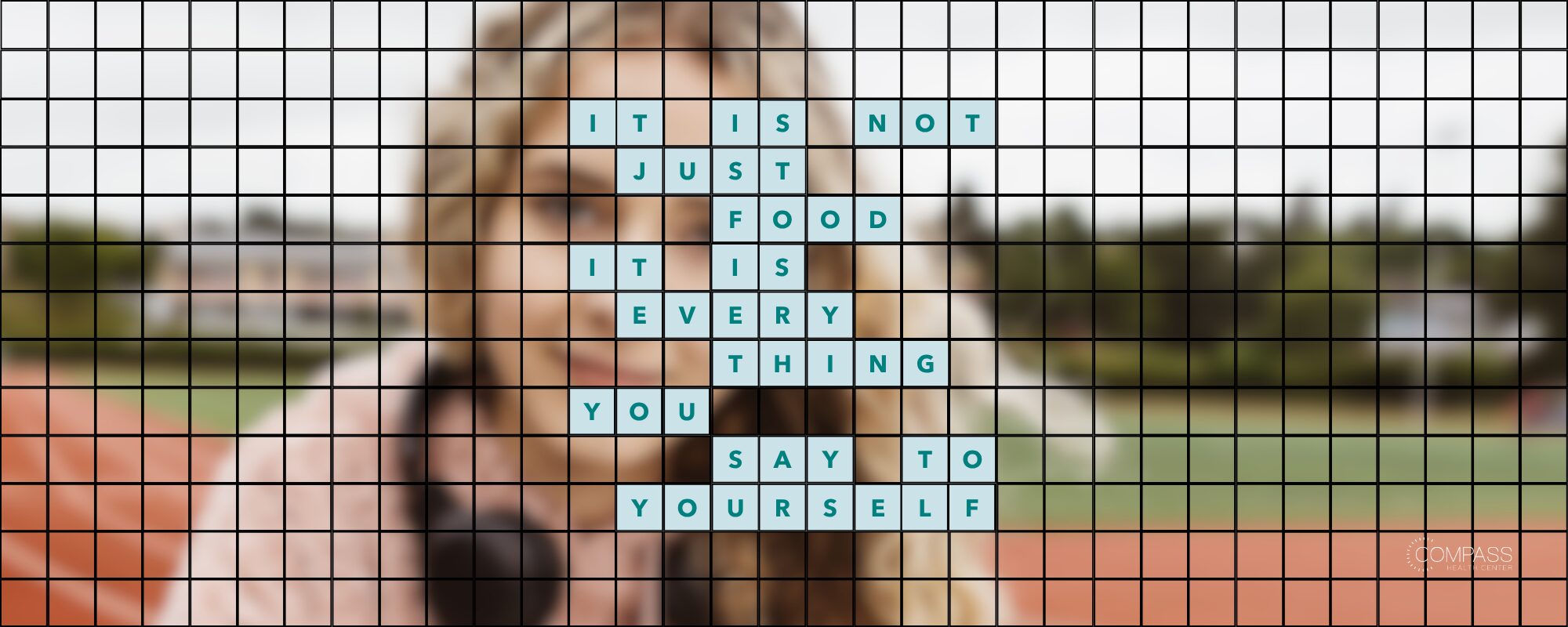

If you or someone you love has noticed changes in eating habits, thoughts about food, concerns about weight, or increased focus on body image, you may wonder: Is this disordered eating, or could it be an eating disorder?
The terms disordered eating and eating disorder are sometimes used interchangeably, but they are not the same.
The key difference is that disordered eating describes unhealthy or irregular eating behaviors that may not meet the diagnostic criteria for an eating disorder, while an eating disorder is a diagnosable mental health condition with specific clinical criteria.
Importantly, you don’t need to have a formal eating disorder diagnosis to deserve and need support. If concerns about food, eating, weight, or body image are affecting your physical health, mental health, or daily life, talking with a qualified professional can help.
What Is Disordered Eating?
Disordered eating refers to unhealthy or irregular eating behaviors that do not meet the full clinical criteria for a diagnosable eating disorder. These behaviors may or may not impact a person’s physical or mental health, but they likely reflect an increasingly difficult relationship with food.
Disordered eating can take many forms, including:
- Chronic or frequent dieting
- Going through cycles of restriction and overeating
- Skipping meals to “make up for” eating earlier
- Following rigid rules about “good/clean” and “bad/ultra-processed” foods
- Avoiding certain foods because of fear, guilt, or anxiety
- Binge eating or restricting in response to stress or emotions
- Exercising primarily to compensate for eating
- Frequently checking weight, food intake, or body size
- Feeling guilt, shame, or anxiety after eating
Disordered eating exists on a spectrum. Some behaviors may be occasional or situational, while others can become increasingly frequent, rigid, or distressing.
Disordered eating is not necessarily an eating disorder, but it should not automatically be dismissed as harmless. Persistent or worsening patterns can increase the risk of developing a clinical eating disorder.
What Is an Eating Disorder?
An eating disorder is a diagnosable mental health condition involving persistent disturbances in eating behavior, thoughts about food, or behaviors related to eating, weight, or body image.
About 9% of the U.S. population will experience an eating disorder in their lifetime, according to Deloitte’s report, Social and Economic Cost of Eating Disorders in the United States of America. Most people with eating disorders are not underweight. Binge eating disorder and bulimia nervosa are more common than anorexia, and people in larger bodies can have restrictive eating disorders that are just as medically serious. Research also shows that Hispanic/Latino, Black, and Asian American individuals are more likely than their white peers to engage in disordered eating behaviors.
Eating disorders are defined by established clinical criteria. Common eating disorders include:
- Anorexia nervosa
- Bulimia nervosa
- Binge eating disorder
- Avoidant/Restrictive Food Intake Disorder (ARFID)
- Other specified feeding or eating disorder (OSFED)
“Weight alone tells you very little about whether someone has an eating disorder,” says Sam Cares, PhD, Director, Eating Disorder Programs at Compass Health Center. “We look at patterns: how much of a person’s thinking, time, and energy is organized around food and their body, and what that is costing them.”
Eating disorders are serious mental health conditions, but they are treatable. Treatment needs vary from person to person and may include psychotherapy, nutritional support, medical monitoring, medication management, and structured programs such as intensive outpatient or partial hospitalization care.
Disordered Eating vs. Eating Disorder: What’s the Difference?
The simplest way to understand the distinction is this:
Disordered eating describes problematic eating behaviors that may not meet diagnostic criteria for an eating disorder or does not cause clinically significant distress or impairment. An eating disorder is a clinically diagnosed mental health condition that meets specific diagnostic criteria.
| Disordered Eating | Eating Disorder | |
| Frequency | Occasional or situational | Persistent, ongoing pattern |
| Diagnosis | Not a clinical diagnosis | Meets DSM-5-TR diagnostic criteria |
| Impact | May cause mild distress | Significant distress or impairment |
| Treatment | May or may not require treatment; awareness and support important | Typically requires professional treatment |
It’s worth noting: the line between the two isn’t always clear-cut, and that’s okay. You don’t need a diagnosis to justify seeking support. If food, weight, or body image are taking up more mental space than feels healthy, that’s reason enough to reach out.
Why Does the Difference Between Disordered Eating and Eating Disorder Matter?
“The point of drawing this distinction isn’t to decide who is sick enough to deserve help,” Cares says. “Instead, it’s to help figure out what kind of help fits. Nobody should have to earn care by getting worse first.”
Understanding where a behavior falls on this spectrum matters for a few reasons:
1. Early intervention can help
Addressing problematic eating behaviors early may help prevent symptoms from becoming more severe or entrenched. You don’t have to wait until eating behaviors meet the criteria for an eating disorder to ask for help.
2. It can reduce shame and confusion
People sometimes believe their symptoms aren’t “bad enough” to deserve attention. That can delay treatment.
Only about 20% of people with eating disorders receive treatment. Recognizing that unhealthy eating patterns exist on a spectrum can make it easier to talk openly about concerns and seek support before they become more disruptive.
3. It can help determine the appropriate level of care
The type and intensity of treatment should be based on a person’s symptoms, needs, safety, functioning, and clinical assessment.
Someone experiencing problematic eating behaviors may benefit from outpatient therapy, nutritional counseling, or early intervention. Someone with a more significant eating disorder may need a structured level of care, such as an Intensive Outpatient Program (IOP) or Partial Hospitalization Program (PHP).
A qualified provider can help determine what level of support is appropriate.
When Should You Seek Help for Disordered Eating?
Consider reaching out to a professional if you notice:
- Food, weight, or body image thoughts are frequent or hard to turn off
- Eating patterns are affecting relationships, work, school, or daily routines
- Behaviors are increasing in frequency or intensity over time
- Physical symptoms like fatigue, dizziness, GI issues, or noticeable weight changes
- A sense that eating feels “out of control” in either direction (i.e., restriction or bingeing)
How Eating Disorder Treatment Helps, Wherever You Are on the Spectrum
Effective eating disorder treatment doesn’t just address food and weight. It looks at the whole person, including the emotional, relational, and psychological factors that often drive disordered eating patterns in the first place. This matters because eating disorders frequently co-occur with anxiety, depression, OCD, or trauma histories, and treating the eating behavior alone often isn’t enough for lasting change.
“We don’t ask people to choose between treating the eating disorder and treating the anxiety, depression, OCD, or trauma that comes with it,” Cares says. “They reinforce each other, so we treat them together to help create lasting change.”
Compass Health Center’s Eating Disorder Treatment program is built around this whole-person approach, offering coordinated, evidence-based care that treats co-occurring conditions alongside the eating disorder itself. In a large study of adolescents in higher levels of care, those with co-occurring psychiatric conditions showed less improvement in eating disorder symptoms. The researchers called for treatment that directly targets these co-occurring symptoms. That’s what we do.
Access to that kind of care can be a barrier, though. Roughly 39% of people with eating disorders struggle with proximity to specialized treatment centers. That’s why Compass is expanding access through its Illinois-based Virtual Eating Disorder Treatment program, which brings structured, evidence-based PHP and IOP care to individuals and families who don’t have a specialized program nearby or who need the flexibility of care from home.

FAQ
Is disordered eating the same as an eating disorder?
No. Disordered eating refers to unhealthy eating behaviors that don’t meet full clinical diagnostic criteria, while an eating disorder is a diagnosable mental health condition with specific, persistent symptoms.
Can disordered eating turn into an eating disorder?
Yes. Disordered eating patterns, left unaddressed, can escalate in frequency and severity over time and may develop into a diagnosable eating disorder.
Do I need a diagnosis to get help?
No. You don’t need a formal eating disorder diagnosis to benefit from professional support. Many people seek help for disordered eating patterns before they meet full clinical criteria.
What treatment options are available for eating disorders?
Treatment ranges from outpatient therapy to more structured levels of care like Intensive Outpatient Programs (IOP) and Partial Hospitalization Programs (PHP), depending on symptom severity. Compass Health Center offers PHP and IOP treatment for eating disorders.
The moment doesn’t wait. Neither does our care.
Whether you’re noticing disordered eating patterns in yourself or a loved one, or you’re concerned it may have progressed into something more, you don’t have to figure out where the line is on your own. A professional evaluation can help clarify what’s happening and what kind of support will help most.
If you’re concerned about your relationship with food, or a loved one’s, reach out to Compass Health Center to learn more about our eating disorder programs, including our upcoming virtual program option.