- Treatment that addresses identity development, independence, and comorbid conditions like anxiety, depression, OCD, trauma, and mental health and substance use
- Virtual care that fits around school, work, and relationships
- Emphasis on peer support, body image work, and life skill

Eating Disorder Treatment
More than meets the eye.
An eating disorder can affect every part of your life. It can leave you feeling confused, exhausted, and isolated. And if you’re feeling this way, you’re not alone. Here at Compass, care begins with meeting you where you are and recognizing what you’ve been going through. With the right support, you can begin to build a healthier relationship with food and your body—and reconnect with the people, experiences, and parts of your life that matter most to you.
About the Program
Program offerings may differ by location. Kindly call us to confirm specific program details.
Ages
- Young Adult (18-23)
- Adult (23+)
Treatment Levels
- IOP
- PHP
Virtual Locations
- Illinois
Program Overview:
Eating disorder recovery is possible, and it starts with being met where you are.
An eating disorder—whether anorexia, bulimia, ARFID, binge eating disorder, or another diagnosis—can feel isolating, exhausting, and relentless. It tells you that you can’t trust yourself, that you should feel ashamed, and that asking for help would only make things worse. It makes sense that it feels this way, and moving forward begins with acknowledgment, not judgment.
Compass offers immediate access to virtual Partial Hospitalization (PHP) and Intensive Outpatient (IOP) programs for anorexia, bulimia, ARFID, and binge eating disorder, for individuals and families across Illinois and Chicago. You’ll work with one clinical team—including Master’s-level clinicians, nurse practitioners, a psychiatrist, and a licensed dietitian—who treats your eating disorder alongside whatever else you’re carrying, instead of sending a portion of your care somewhere else. It’s evidence-based, and it’s yours to move through all from the comfort of home.
Whether you’re reaching out for yourself or someone you love, we work with people whose symptoms are interfering with daily life. Many come to Compass when weekly therapy isn’t enough, after an ER visit, or following inpatient care. Others are looking for support with comorbid anxiety, depression, or trauma, and benefit from our integrated, whole-person approach.
Not Sure If This Program Is Right for You?
Many people come to us feeling uncertain. They often feel unsure if what they’re going through is “serious enough,” or if they’re ready for treatment.
Here’s the truth: if you’re feeling stuck, overwhelmed, or like things are getting worse instead of better, we’re here to help.
Whether eating has started to feel fraught, you’re not sure if what you’re going through “counts,” or you just need someone to talk to, you don’t have to figure it out alone. Start here.
What Is a Virtual Eating Disorder PHP or IOP Program?
A virtual PHP or IOP provides the same intensive outpatient eating disorder treatment as an in-person program—including therapy, skills groups, and psychiatric support—delivered remotely via secure video sessions. This model removes common barriers to care, such as travel time, geographic distance from specialty providers, and long waitlists, making it easier for Illinois and Chicago-area residents to access eating disorder treatment quickly.

Who Is This Program For?
This program is designed for young adults and adults in Illinois who:
- Are struggling with an eating disorder, such as anorexia nervosa, bulimia nervosa, ARFID (avoidant/restrictive food intake disorder), binge eating disorder, or other specified feeding or eating disorders (OSFED) — including comorbid mental health conditions such as OCD, PTSD, anxiety, or depression
- Need a higher level of care than weekly outpatient therapy but want to avoid inpatient hospitalization
- Are seeking eating disorder treatment without long wait times
- Want care that treats the full picture, not just eating disorder symptoms in isolation

Ages
Age-Based Eating Disorder Treatment in Illinois
Our Virtual Eating Disorder Program supports young adults and adults through age-specific treatment tailored to their unique needs and stage of life.
- Integrated care for eating disorders, including complex eating disorder presentations and comorbid mental health conditions, including OCD, trauma, anxiety, depression, and mental health and substance use
- Focus on long-term recovery, relapse prevention, and daily functioning
- Virtual scheduling for working professionals, caregivers, and other adult responsibilities
How Quickly Can Someone Start Virtual Eating Disorder Treatment?
Compass Health Center provides assessments within 24 hours of initial inquiry and psychiatric evaluations within 24–48 hours of program start, so individuals and families can access care during moments of need and crisis without unnecessary delays.
Our Individualized PHP and IOP Care Plans Include
Immediate Access
Eating disorder assessments within 24 hours, with program entry as soon as the same or next day.
Integrated Care Model
Concurrent treatment for eating disorders and comorbid mental health conditions, including OCD, anxiety, depression, and trauma.
Psychiatric Evaluations
Initial evaluation within 48 hours, with ongoing medication management and regular consultation.
Dedicated Psychiatric Support
A psychiatrist or psychiatric nurse practitioner follows each participant throughout treatment and manages medication when appropriate.
24/7 Psychiatric Access
On-call prescribers available around the clock for urgent needs outside program hours.
Personalized Treatment Plans
Tailored care plans built around each participant’s goals for sustainable progress.
Multidisciplinary Team
Includes psychiatrists, Master’s-level clinicians, and registered dietitians specializing in eating disorder care.
Our Treatment Modalities
Eating disorders rarely show up alone. Many individuals struggling with disordered eating are also managing underlying anxiety, trauma, depression, or stress. Our virtual PHP and IOP go beyond surface-level symptom management to treat the whole picture instead of the eating disorder in isolation.
Gold-standard clinical approaches, including CBT-E, CBT-AR, DBT, ACT, and exposure-based therapy, rooted in eating disorder research and best practices.
Clinical nutrition guidance aligned with a Health At Every Size-informed, weight-inclusive approach.
One-on-one sessions with Master’s- and doctoral-level clinicians specializing in eating disorder treatment.
Group therapy includes one or two group facilitators and a cohort of participants (typically between 4 – 16 people in the space). The number and make-up of participants in each group may depend upon program census, type/content of group, and various other factors. The group therapy space is developed to be a confidential and supportive milieu in which participants can learn and practice coping skills and discuss topics to build insight and actively move towards identified treatment goals. Group members are encouraged to validate and relate to each other and engage with therapists to discuss and process skill integration, emotions, and thought processes that influence specific behaviors and share about current struggles and successes. Group therapy at Compass Health Center focuses on building awareness around behavioral goals, learning and practicing evidenced-based skills, and using a confidential space to process relevant and relatable topics with peers. Group facilitators guide understanding related to skills and topics linked to ACT, DBT, and CBT while connecting these topics to treatment objectives and skill application and integration in the home, school, and work settings. Groups may be didactic, psychoeducational, interpersonal/process, or experiential and often employ multiple techniques to increase engagement and impact.
Family therapy occurs between a therapist and all or some family members. It is often focused on exploring the dynamics within a family, improving communication, resolving conflict, and helping families live more harmoniously. Supporting families in family therapy to integrate evidence-based skills as a family and as individuals can be incredibly impactful. Skills can help family members feel more connected with one another and empower them to manage stressors in the family system. At times, the therapist might want to meet with individuals alone to prepare for sessions with the whole family system; however, most of the treatment is provided with families together. At Compass, family therapy is an essential part of our treatment model. Ensuring our patients and their loved ones feel informed, supported, and engaged in the treatment process and practicing evidence-based skills is a top priority. Our dedicated family therapists work closely with patients to identify who should participate in family therapy sessions and to create a focus for those sessions to best support their goals at Compass.
Secure telehealth care that meets individuals and families where they are, regardless of location in the state.
The moment doesn’t wait. Neither does our care.
You don’t have to choose between treating your eating disorder or the conditions that come with it. We treat both—because they’re connected, and because real, long-term recovery depends on it. Call us at 877-552-6672 to schedule an assessment within 24 hours. Virtual eating disorder treatment is available across Illinois—with more locations coming soon.
For More Information or to Schedule an Assessment, Call Us or Fill Out the Form Below.
Frequently Asked Questions
Eating Disorder Treatment
Our programs use structured, evidence-based treatment, including Enhanced Cognitive Behavioral Therapy (CBT-E), CBT for Avoidant/Restrictive Food Intake Disorder (CBT-AR), Dialectical Behavior Therapy (DBT), Acceptance and Commitment Therapy (ACT), and exposure-based therapy to help you build skills, reduce symptoms, and move forward in recovery.
Yes. We treat eating disorders alongside comorbid mental health conditions—including anxiety, depression, trauma, OCD, and substance use—in one integrated, whole-person program, rather than treating each condition separately.
Yes. Every participant receives individual therapy with a Master’s-level clinician, plus regular check-ins with a dietitian and psychiatrist or psychiatric nurse practitioner for ongoing medication and mental health support.
Yes. We offer regular family therapy sessions to help build trust, communication, and support systems throughout treatment. Patients can choose who’s part of that, whether it’s relatives, a partner, or close friends.
You’ll attend daily group therapy focused on skill-building and nutrition education. Additional groups may include body image work, core values development, relapse prevention, and support for rebuilding a life outside of the eating disorder.
Yes. Our clinical nutrition approach is weight-inclusive and aligned with the Health At Every Size-informed, weight inclusive framework, focusing on rebuilding a sustainable, non-restrictive relationship with food rather than prescribing a specific weight or body outcome. In addition, every meal and snack during program hours is supported by a dietitian.
Yes. We incorporate art, movement, mindfulness, and yoga as part of a comprehensive approach to eating disorder recovery.
Yes. If clinically indicated, psychiatric medication management is provided as part of your individualized treatment plan.
Compass Health Center provides assessments within 24 hours of the initial inquiry and begins treatment the same day or the next day, helping individuals and families access care quickly and avoid unnecessary ER visits or inpatient admissions.
Yes. Currently, our Eating Disorder programs are delivered entirely online, giving individuals and families across Illinois access to specialized eating disorder treatment regardless of location.
Our Impact
We understand that success can look different for everyone depending on your hopes and needs. Here are a few ways we define success:
95%
of patients step down to a lower level of care after treatment
99%
would refer a family member or friend
97%
of patients choose to start a program the same day or next day
90%
of patients maintain progress, not requiring higher care levels for 12+ months post-treatment

I liked the group sessions, the creative expression, the enthusiasm, and genuineness of the staff. I thought it was really important to have the balance of one-on-one care and group connection, and this program nailed it.

I trusted my entire team.

Compass has it "down" in helping their patients! A very complete and comprehensive program. We were impressed with the services and the compassion our son received.

They gave me hope again.
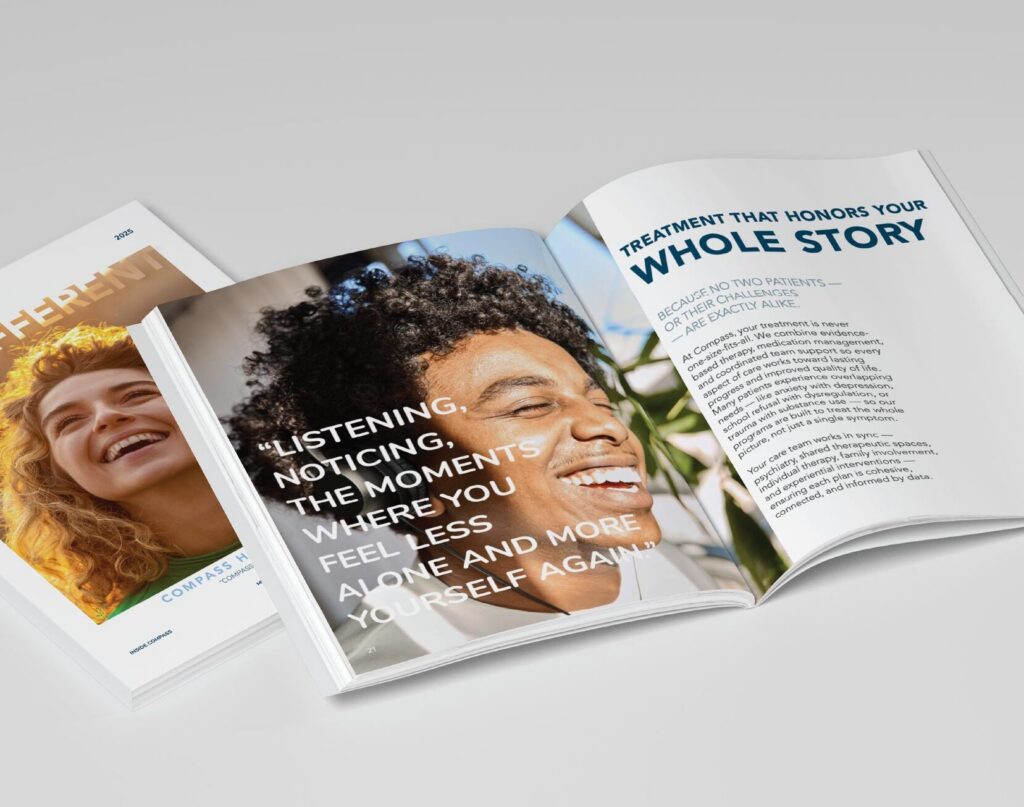
Meet Forward, Compass Health Center’s Lookbook
Mental health care is changing—and so is the way we tell its story.
Forward is a collection of voices, insights, and design that feels less like a brochure and more like a magazine you’d actually want to flip through. We created this Lookbook to show how care can be approachable, engaging, and thoughtfully designed—just as our treatment experience is. Inside, you’ll find our philosophy, programs, and patient outcomes shaping Compass care today, and what’s next.