

Minnesota’s Mental Health Crisis and the Growing Need for Care
Across Minnesota, more families are talking more openly about mental health, yet finding help remains difficult. Anxiety, depression, OCD, trauma, and related challenges are affecting youth, young adults, and adults at unprecedented levels, yet long waitlists, limited psychiatric availability, and fragmented care systems leave many people without meaningful support.
According to NAMI Minnesota, more than one in five adults experiences a mental health condition each year. Over 37 percent report symptoms of anxiety or depression, and 16 percent say they cannot access the care they need. Among adolescents, more than half of those with depression receive no treatment at all. In 2022, 860 Minnesotans lost their lives to suicide—a devastating reminder of how urgently care gaps must be addressed.
For many, options feel limited: weekly therapy that isn’t enough or hospitalization that feels too extreme. This is where Compass Health Center is stepping in with a new location in Golden Valley and virtual services statewide, offering immediate, psychiatrist-led care for those who need more structure and support.

What Are PHP and IOP Programs? Understanding the “Missing Middle” in Mental Health Care
Mental health treatment is not one-size-fits-all. When outpatient therapy doesn’t provide enough structure or support, but hospitalization isn’t appropriate, patients often feel stuck in what we call the “missing middle” or “in-between area.”
Partial Hospitalization (PHP) and Intensive Outpatient (IOP) programs bridge this gap. These structured, evidence-based programs provide intensive treatment during the day while allowing patients to return home each evening.
- PHP typically runs five days per week, often full-day, with group therapy, individual therapy, psychiatry, and skills training.
- IOP offers similar evidence-based care in a shorter format—several hours per day or evening, 3-5 days per week.
Children and teens can maintain school progress; adults can keep up with certain day-to-day responsibilities while receiving the level of support they need to stabilize and move forward.
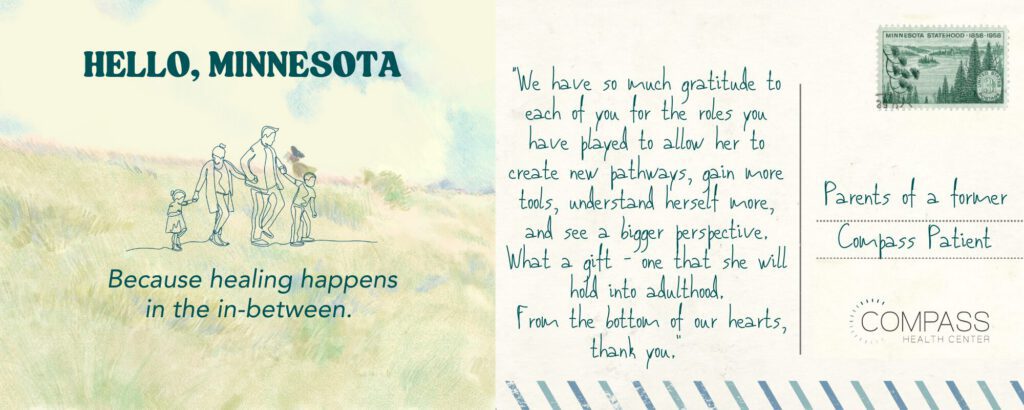
Because healing happens in the in-between.
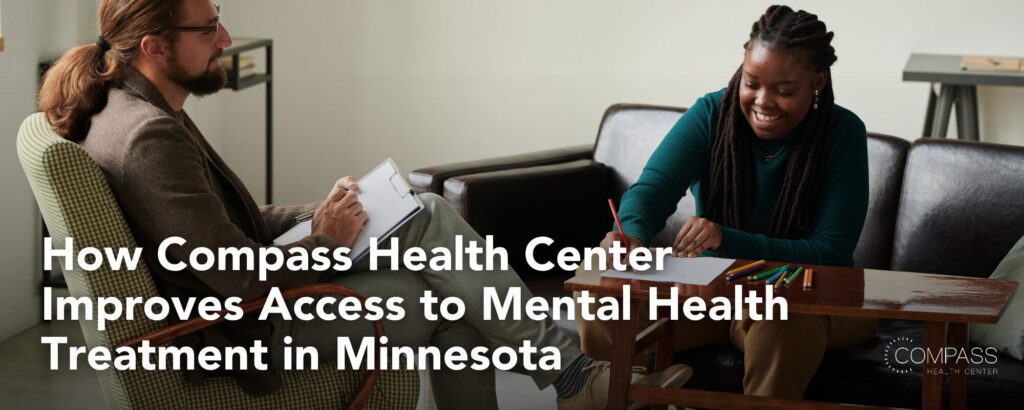
How Compass Health Center Improves Access to Mental Health Treatment in Minnesota
In Minnesota, families often wait months to see a psychiatrist. During that time, symptoms can worsen and crises become harder to manage.
Compass Health Center changes that by offering same- or next-day assessments and starting treatment within days. Every program is psychiatrist-led, meaning patients receive consistent medical oversight in addition to therapy and skill-based care.
That collaboration—psychiatrists, therapists, nurses, and specialists working together—makes care more effective and accessible. For many families, it’s the first time help has felt both immediate and sustainable.
Inside Compass Health Center’s Integrated, Evidence-Based Care Model
Compass’s treatment model combines psychiatry, therapy, and family engagement in one coordinated plan. Treatment includes:
- Psychiatric evaluation and medication management
- Individual and group therapy
- Family therapy and support
- Skill-based and experiential therapies
- Specialized, integrated treatment for co-occurring disorders
Clinicians use evidence-based modalities such as Cognitive Behavioral Therapy (CBT), Dialectical Behavior Therapy (DBT), Exposure and Response Prevention (ERP), Acceptance and Commitment Therapy (ACT), and more.
Progress is measured using validated tools like the PHQ-9, GAD-7, and Y-BOCS, allowing patients, families, and clinicians to see real improvements over time. This approach—known as measurement-based care—ensures that every decision is guided by data and patient outcomes.
A typical day might include morning group, a midday psychiatry session, and an afternoon group focused on managing anxiety, depression, OCD, or trauma. The structure creates stability while allowing flexibility for each patient’s needs. It’s important to note that every patient’s treatment plan is individualized, so your day may look a little different.

Supporting Families, Schools, and Communities
Mental health recovery doesn’t happen in isolation. Compass programs involve families, schools, and community partners to build sustainable support.
Parents and caregivers are included throughout treatment, learning how to communicate effectively and reinforce progress at home. For youth, Compass collaborates with schools to coordinate academic work and ease the transition back to the classroom. For adults, staff may help coordinate with workplaces or universities to support return-to-life planning.
This whole-system approach helps patients maintain the progress they make in treatment once they return to daily routines.
Measurable Results: Compass Health Center’s Proven Outcomes
Compass’s data-driven model produces measurable improvements across conditions and age groups.
- Patients experience an average of over 55 percent reduction in depression and anxiety symptoms during treatment.
- Those in trauma-specific programs report approximately a 55 percent reduction in symptoms.
These numbers reflect more than clinical change—they represent individuals returning to school, reconnecting with family, and rebuilding their lives.
Why Compass Chose Golden Valley for Its First Minnesota Location
Golden Valley was selected for its accessibility to the Twin Cities metro area and surrounding suburbs. The new location allows Compass to serve families throughout Minnesota with both in-person and virtual programming.
More than 1.7 million Minnesotans live in areas lacking enough mental health professionals, and residents are four times more likely to be forced out-of-network for psychiatric care compared to primary care. Compass’s model directly addresses these barriers through rapid access, integrated services, and data-driven outcomes.

The People Behind the Programs
Behind every outcome is a team of clinicians who bring expertise and empathy to care. Every program is psychiatry-led and built around collaboration—psychiatrists, therapists, nurses, and specialists working together to help each patient make measurable progress.
Our specialty programs span anxiety, depression, trauma, OCD, school anxiety and refusal, and other co-occurring challenges. This integrated model allows for treatment plans that evolve in real time, because mental health needs rarely fit neatly into one category.

The Future of Mental Health Care in Minnesota
Compass Health Center’s opening in Minnesota marks a significant step forward for mental health access across the state. By offering psychiatrist-led PHP and IOP programs with immediate access, Compass helps patients move from crisis toward stability and lasting progress.
This is more than a new mental health center—it’s a new approach to care in Minnesota, where timely access, evidence-based treatment, and compassionate support come together to make recovery possible.
Start Today
If you or someone you care about is struggling, help is available.
- Request an assessment: same- or next-day appointments are available.
- Refer a patient or partner with us: Compass collaborates with clinicians, schools, and community providers statewide.
Learn more about Compass Health Center – Golden Valley and how we’re expanding access to mental health treatment across Minnesota.