
Episode Description
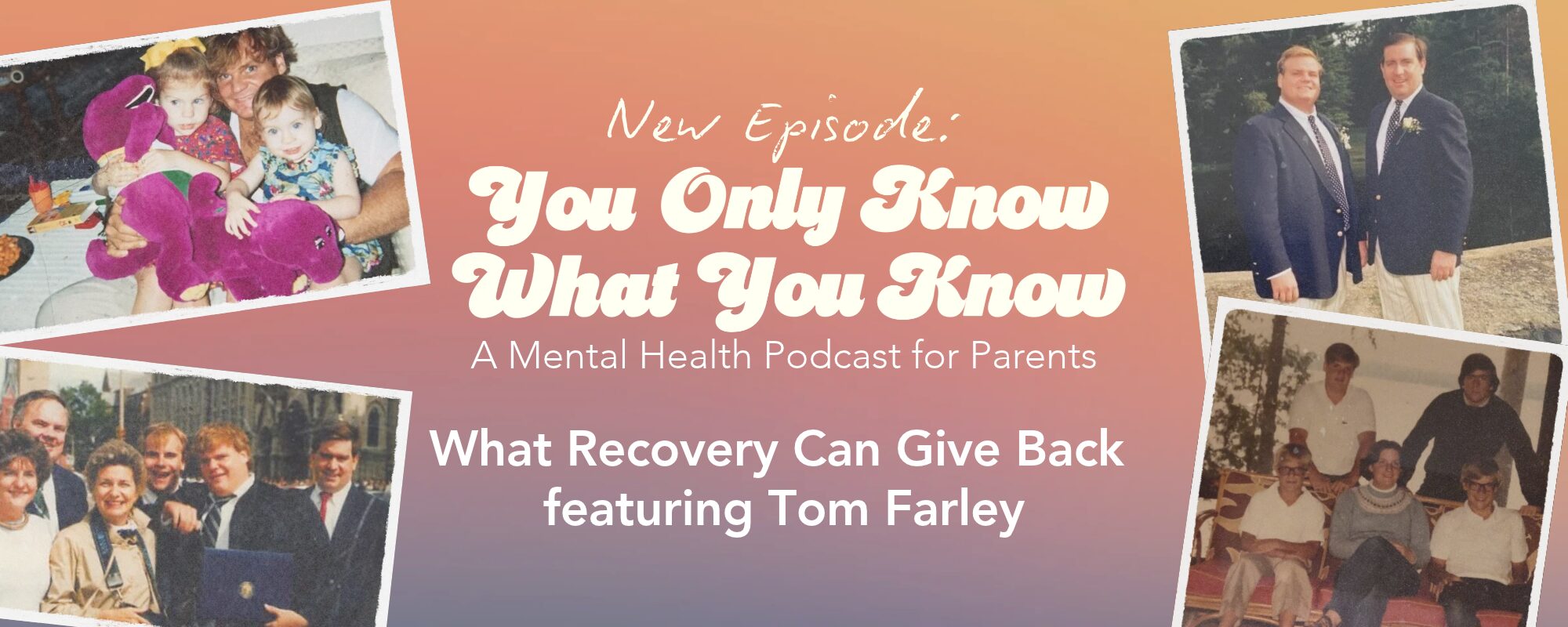
Kids and teens usually sense that something is off in a family long before anyone talks about it, especially when addiction is part of the story. In this episode of You Only Know What You Know, hosts Beth Hope, LCSW, and Britt Teasdale talk with Tom Farley, community outreach director at recovery.com. Tom has spent years sharing his family’s story, including the loss of his brother, actor and comedian Chris Farley. He has also been open about his own experience with alcohol, recovery, and grief.
Tom talks about growing up in a family where humor covered pain, how roles and secrecy keep families stuck, and what recovery taught him about honesty and being a father. He also explains the difference between sobriety and recovery. The conversation covers how parents can talk to kids about addiction, how to support a loved one without losing the relationship, and why connection matters so much in healing.
Read more of Tom’s story: Tom Farley: A Legacy of Laughter and Healing
Meet the Guest
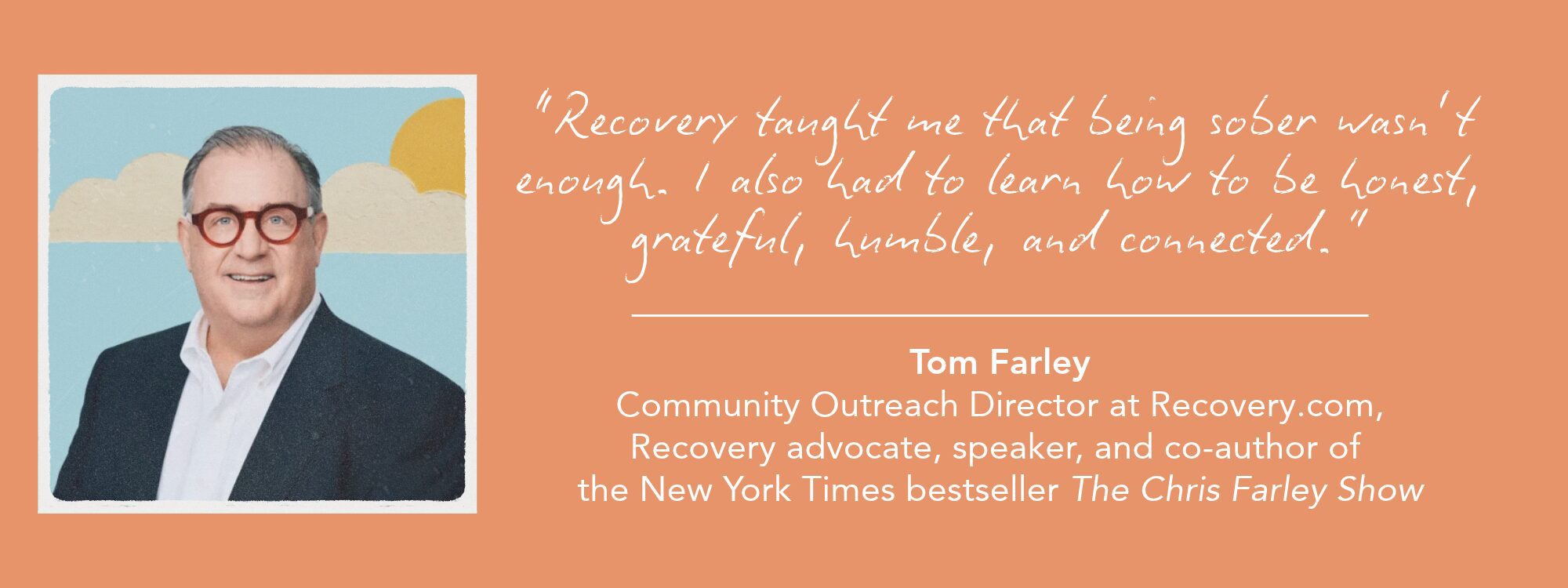
Tom Farley, Community Outreach Director, recovery.com
Tom grew up in Madison, Wisconsin, in a large Irish family, and worked in finance and marketing in New York before moving back to Wisconsin. After the death of his brother Chris Farley, he began sharing his family’s story and started the Chris Farley Foundation, using improv to teach connection and belonging in schools. He is also in recovery. At recovery.com, he helps connect people with treatment resources and shares stories that break down stigma and show what life in recovery can look like.
Episode Highlights
The conversation below comes from episode 14 of You Only Know What You Know featuring Tom Farley. The transcript has been lightly edited for length and readability.
How Does Growing Up in a Family With Addiction Shape a Child?
Tom Farley: In our family, alcohol wasn’t just normal. It was part of our identity. We had a long generational history with alcohol, we were Irish, and we lived in Wisconsin. If you were a Farley, you drank. So even when it became a problem, we thought, “Yes, it may be an issue, but it’s who we are, and you’re no different from everyone else.”
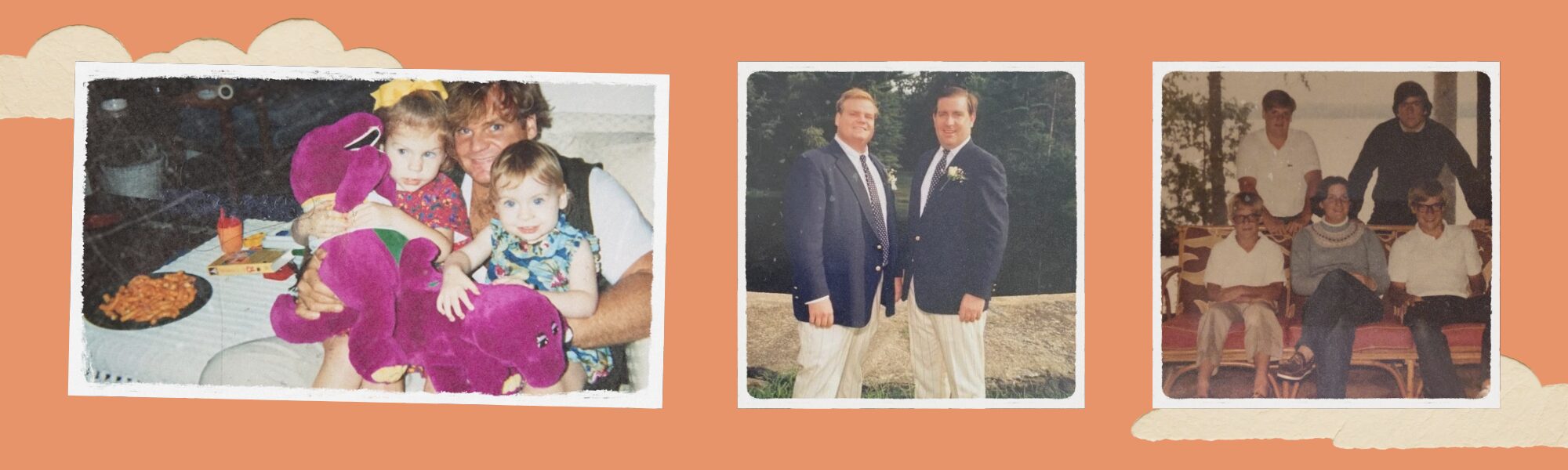
I used to describe my family as a circus. My father was out front of the tent, showing off what he’d created. I was the ringleader, thinking it was all about me. Chris was the elephant, and he got all the oohs and ahs. My other brothers were the clowns, my sister was the beautiful woman in the sequin gown, and my mother was up on the high trapeze, wanting no part of it. It was a lot of fun, and it was all about laughter. But laughter protected us from a lot of pain.
Can Humor Hide Pain in a Family?
Tom Farley: Humor hides a lot of pain and a lot of trauma. That’s probably why we were so good at it, because we had so much to hide. If anything painful came up, we leaned harder into comedy. We stayed on the surface and never really learned other emotions. Pain helps you develop those other emotions, and that’s a big part of being human. We didn’t want to do that, so we just laughed.
There’s a quote I love from Maya Angelou, that only true equals can laugh together. When laughter is unbalanced, it isn’t true laughter. When two people can laugh together, it can open the door to joy. Drinking is similar. A drink with someone can open up connection, but when it’s out of balance, you eliminate so much of what connection and being human together offer.
What Is the Difference Between Sobriety and Recovery?
Tom Farley: It comes down to your authentic self. I was sober for long stretches when my kids were young, and they never saw me drinking. I thought that gave them so much more than I’d had. But I was still using the playbook my dad gave me, the teasing father who laughs to cover things up. I could still cause the same kinds of hurt, and it had nothing to do with drinking.
Sobriety gave me clarity, but being sober alone didn’t help with my traumas, fears, or self-doubt. When I started learning the tools of recovery, rigorous honesty, gratitude, and humility, I realized the person I’d been putting out to the world couldn’t be those things, because it wasn’t a real person. The more honest, grateful, and humble I became, the less fear and self-doubt I had. Recovery is going from survival mode to living mode.
Beth Hope, LCSW: That’s why integrated treatment matters. Substance use is often a coping skill for something underneath, like anxiety, depression, or grief. You can’t take it away and leave someone without other ways to cope.
Tom Farley: Treatment is like pulling someone from the deep end to the side of the pool. If you haven’t taught them to get out or learn to swim, they’ll float right back out. Teens especially can be stuck in survival mode, either connecting inauthentically or completely isolated. We need to help them survive, and give them strategies for feeling more authentic, with less fear and self-doubt.
How Do Parents Talk to Kids About a Family History of Addiction?
Tom Farley: I don’t think the conversation should be about “this uncle had a drinking problem” or what happened three generations ago. That keeps it about the substance, and people will experiment anyway. It’s easier and more useful to focus on mental health. How are you dealing with your traumas? Are you being as honest as you can be? How much fear do you have? What are you grateful for? That’s the new playbook, because the old one treats it as a behavior that just has to stop.
You don’t have to be in recovery to use these tools. They’re tools to be a better human. Be grateful for the little things, not just the big ones. Make small amends, like “I’m sorry I didn’t call you last week.” And be honest and vulnerable as much as you can. Kids see through half-truths very easily.
Can Parents Repair Relationships with Their Kids After Addiction?
Tom Farley: Yes, and it can start with small moments. A few years into recovery, I had lunch with my oldest daughter. A small hiccup with ordering set me off, and then I caught myself. I apologized to the server, then to her, and told her I was glad she was there. She told me that growing up, little things would set me off and they’d stay away from me the rest of the day. But this time she saw me catch myself and apologize, and I’d never done that before.
I realized I can repair relationships just by being honest. Maybe not on my timeline, but every interaction with my kids is an opportunity for healing, and that’s all on me. They don’t have to do anything. I thought it was a lost cause, and there’s great hope in that. I tell my kids that their traumas aren’t their fault, but they are their problem. I may be part of those traumas, but I can’t solve them for you. I’ll support you, but you have to do the work.
Beth Hope, LCSW: That’s radical vulnerability, to learn your kids experienced you in ways you don’t even remember.
How Should Parents Talk to Teens and College Students About Substance Use?
Tom Farley: The high school and college students I talk to now got the worst of COVID, and we made it so hard on them, yet they survived. They’re resilient, and they’re comfortable using their voices. I tell them to lean into that. And I tell parents that we’re wired to solve things. If I had stopped solving and asked what emotion was driving something, like “Are you afraid of something?”, things would have gone differently. Your solution is based on your experience, and their world is so different. Lean into understanding rather than solutions.
Beth Hope, LCSW: I always say to start with curiosity. Not solving for your kid, but solving together, and showing that you can handle these conversations.
Tom Farley: Be honest, as much as you can. It’s an art, but it’s worth pursuing instead of hiding behind half-truths and false emotion, like “let’s all just laugh.” We want to tell our kids not to go into the world vulnerable or honest, but that’s the worst advice.
How Can You Support a Loved One With Addiction Without Losing the Relationship?
Tom Farley: Separate the person from the addiction. The addictive Chris had fear, regret, anger, and sadness, and I didn’t want those feelings attached to the brother I love. I’m not sorry the addictive Chris is gone, but I wanted my brother here. I can still develop that relationship, and in some ways I have a better one with Chris now than when he was alive, because I understand him more.
Parents can do the same. Try to separate the person with an illness and help them, but don’t lose the person you love. It’s not about curing this aspect of them. Keep growing the relationship. And if you lean into it, you’re not just healing that person, you’re healing yourself too.
Why Does Community Matter So Much in Recovery?
Tom Farley: In recovery, we tell our stories because we cannot heal in isolation. You can’t heal yourself. You need other people to model it and to validate it, to tell you that something helped them and that you’re doing it right. Being in a room with others, I realized I’d had job loss and broken relationships just like they had. It had nothing to do with how much anyone drank. I saw my story in theirs, and once I realized I wasn’t alone, I needed that connection.
Beth Hope, LCSW: At Compass, patients often start out saying they don’t want to do group, and then they describe the power of common humanity.
Tom Farley: That’s where the healing happens. Understanding your traumas is important work, but the healing comes with others. You don’t learn to be human without other humans. Telling our stories openly also helps others see they’re not alone, and that they don’t have to hide it anymore.
What Led Tom Farley to Start Recovery?
Tom Farley: There was a summer when I was managing and rationalizing my drinking, and I knew I couldn’t sustain it or keep waking up feeling the way I did. I stopped drinking on my own, but what changed things was a friend, a clinician I’d worked with on teen programs, who invited me for coffee on a Saturday morning in a church basement. It was a meeting. She was someone who had helped so many people in our community, and I couldn’t say no. That was my first surrender.
In the past, I’d try meetings and point to the other person. This time, I heard people and thought, “I’ve had job loss like this person. I’ve had broken relationships like this person.” I just needed to be sober to get all these tools.
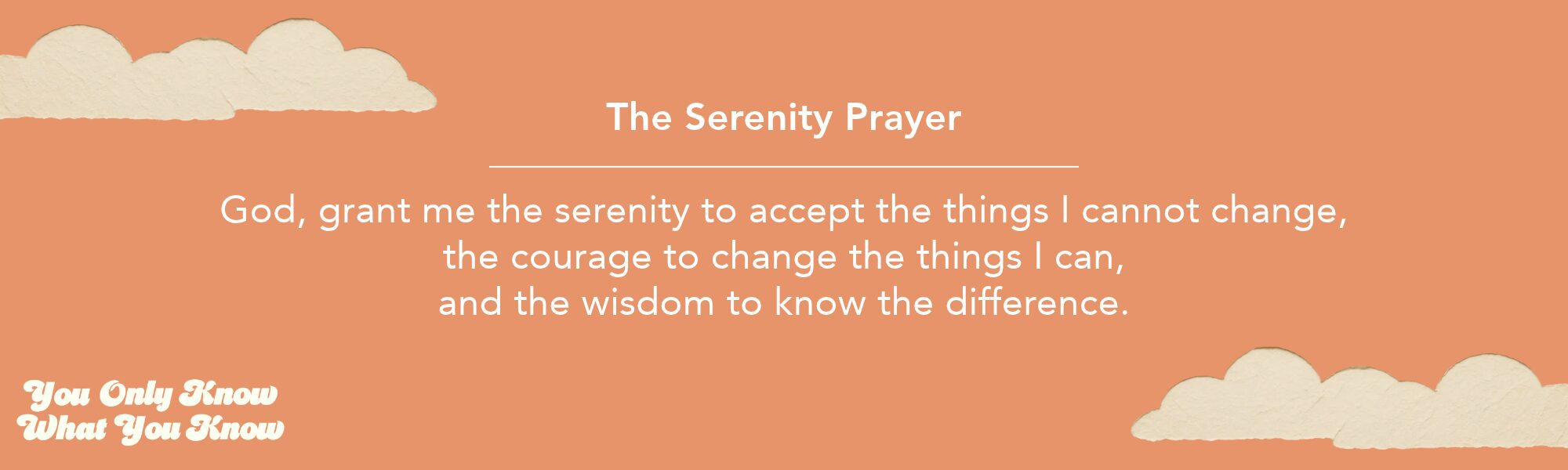
How Can the Serenity Prayer Help Families Affected by Addiction?
Tom Farley: It’s about controlling what you can control. In families, instead of making it one person’s problem, you ask, “What do I have control over?” The person struggling sees the hypocrisy when everyone else says “you need to behave better” without looking at themselves. They don’t trust you.
If you’re worried about a friend or family member, here’s one thing you can do: don’t watch the game with a beer in your hand. That sends the message that we’re in this together, not “you have the problem and I don’t.” You also can’t love someone out of addiction, but you can’t punish them out of it either. Don’t float to the extremes. Our emotions will point us to one of them very quickly, and the answer is somewhere in the middle.
Beth Hope, LCSW: The prayer is essentially dialectical behavior therapy (DBT) in a nutshell, balancing acceptance and change. It’s used in Al-Anon by people who love someone with addiction, and you don’t have to be religious for it to help. You can’t fix someone who isn’t ready.
What do you wish more families understood?
Tom Farley: You cannot love someone out of addiction, and you can’t punish them out of it. Start with yourself. You can’t ignore your own traumas to work on your kids. Therapists guide you, but you do the work, and it’s a beautiful feeling when you’ve healed.
***
Worried about a loved one’s mental health or substance use? recovery.com can help you find treatment options that fit. For child, teen, and young adult mental health care, explore Compass Health Center’s programs or schedule an appointment. You can also call the SAMHSA National Helpline at 1-800-662-HELP (4357).