As autumn arrives, cooler air and colorful leaves bring new smells, foods, flavors, costumes, and celebrations. The joy and comfort this time of year brings to one person may feel like distress, overstimulation, fear, or overwhelm to another.
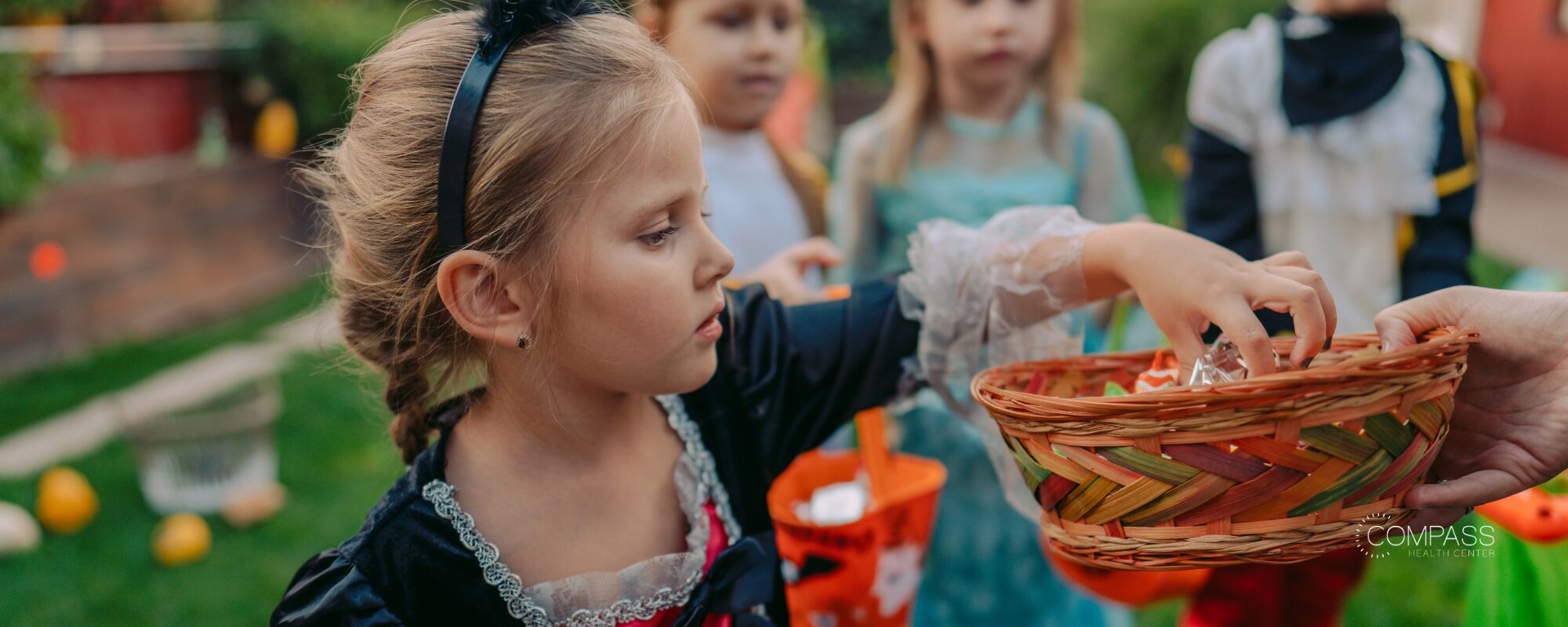
Halloween is a celebration built on surprises: scratchy costumes with tags, tight masks, spooky decorations, crowded sidewalks, doorbells, barking dogs, flashing lights, loads of sugar, and a bedtime that might disappear. It also comes with social scripts: knock on strangers’ doors, say “trick or treat,” say thank you, and accept what you’re given, all quickly performed on cue.
For neurodivergent children, teens, and adults, Halloween touches sensory processing, physical demands, anxiety, social and communication expectations, and family routines all at once. For some, Halloween holds real fun: a season when the whole country joins in on make-believe, costumes, and deep special interests. For others, it brings increased distress, and a hard night is rarely just about “behavior.”
Why Can Halloween Feel Overwhelming for Neurodivergent Kids and Teens?
Many people with autism, ADHD, and/or sensory processing differences receive sensory information differently. A sound others tune out can feel painfully loud; a seam can feel like sandpaper. Under- or over-stimulation can change whether a person’s energy “battery” feels fully charged, running low, or empty during Halloween.
Social demands add another layer. Approaching strangers, timing a greeting, and adjusting to each new doorway all take effort. That effort draws from the same limited battery that is already being drained by noise, crowds, and uncertainty.
Some neurodivergent young people also mask every day by hiding distress or copying social behaviors to blend in. On Halloween, when wearing a literal mask is common, it’s worth asking: which mask feels freeing and which feels exhausting?
When the expectations feel like too much, a person’s battery runs out, and we may see a meltdown, a shutdown, refusal, or a sudden need to go home. These responses are communication, not defiance. They are the nervous system saying, “I’m overwhelmed.”
A whole-person approach to care means looking at the environment, not only the reaction. Changing the setting, pace, or expectations is often the most effective place to start. A few practical ideas to support sensory, social, and emotional needs can bring ease and joy to this season.
How Can I Make Halloween Costumes More Sensory-Friendly?
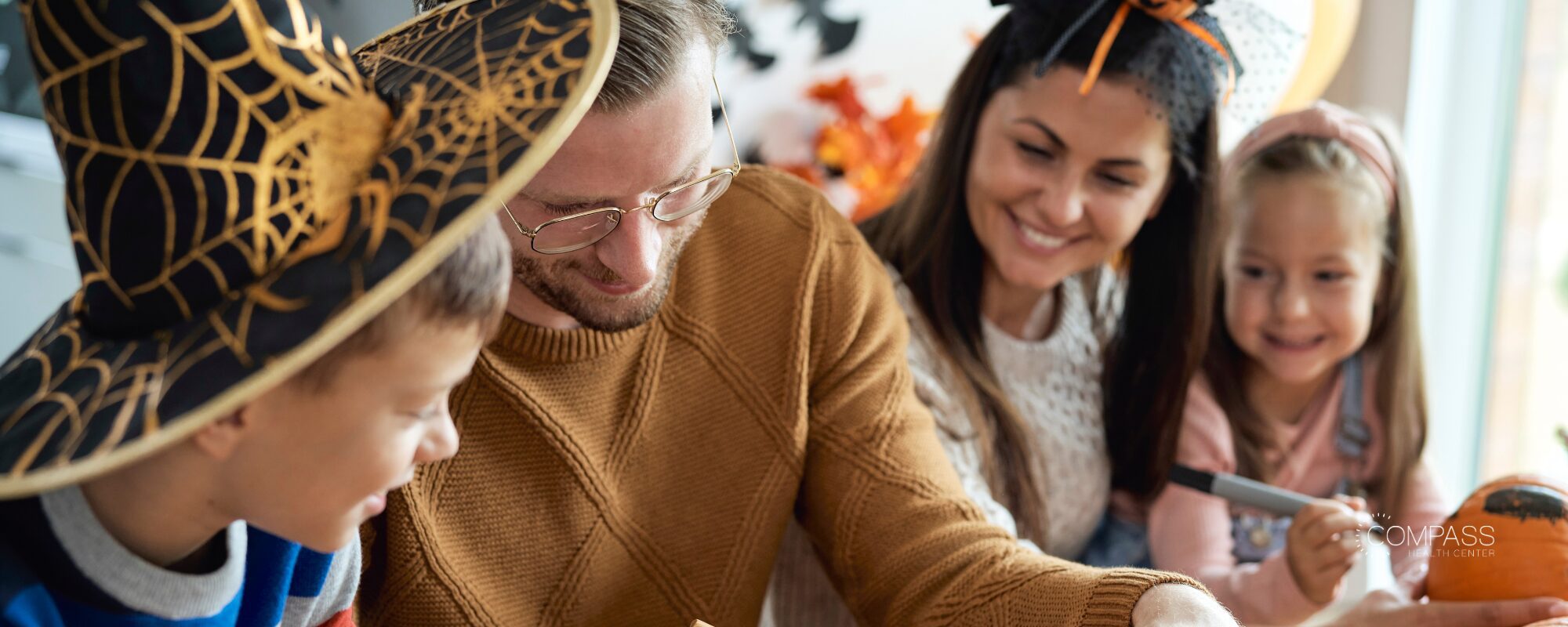
- Hold a “costume dress rehearsal.” Introduce the costume weeks ahead. Let your child wear it while watching TV or playing, starting with a few minutes and building up over time.
- Choose soft, seamless, tag-free pieces if your child is sensitive to certain materials and fabrics. You can even layer the costume over something familiar and more comfortable, like pajamas, leggings, Lycra, or sweats, so it doesn’t touch the skin directly.
- Respect pressure preferences. Some kids feel calmer in a snug or heavier layer, like a hoodie or compression shirt. Others need layers that are loose and light.
- Swap masks or face paint for lower-sensory options. These could be hats, ears on a headband, a cape, a character hoodie, or light makeup.
- Count alternatives as real costumes. Themed pajamas, character sweatshirts or shirts, and patches all count.
How Do I Prepare My Child for Trick-or-Treating and Social Expectations?
- Pre-teach the steps. Create a social story, a step-by-step card, or a one-pager with pictures of your child in their costume.
- Role-play at your own front door until it feels familiar. If you can, repeat at friends’ and neighbors’ doors.
- Make a visual schedule for the night. This can look like: Put on costume > Visit 4 houses > Check candy > Eat dinner > 30 minutes of cool-down time > Go to bed.
- Rewrite the rules. What can you let go of for the day? Eye contact and spoken words are optional. Using an AAC (augmentative and alternative communication) device or a recording, handing over a printed “Trick or treat” and “Thank you” card, waving, or having someone speak for them are all completely normal. So are skipping a shower, eating extra sugar, and staying up later.
What Are Sensory-Friendly Trick-or-Treating Options?
- Walk the route ahead of time. Go once in daylight and again in the dark, so decorations aren’t a surprise.
- Look for gentler options, like trunk-or-treats, daytime events, and family-friendly (sometimes sensory-friendly) events at high schools, stores, malls, and attractions. If you do head out on your own, choose quieter streets and skip houses with fog machines, strobe lights, or jump scares.
- Pack a toolkit with noise-reducing headphones, tinted glasses, a favorite fidget, water, and familiar snacks.
- Rethink the candy. For kids with food selectivity, ARFID, or allergies, look for Teal Pumpkin houses offering non-food treats. If your child enjoys trading, let them swap candy for other treats or items.
How Long Should We Trick-or-Treat? Plan Breaks and an Exit Signal
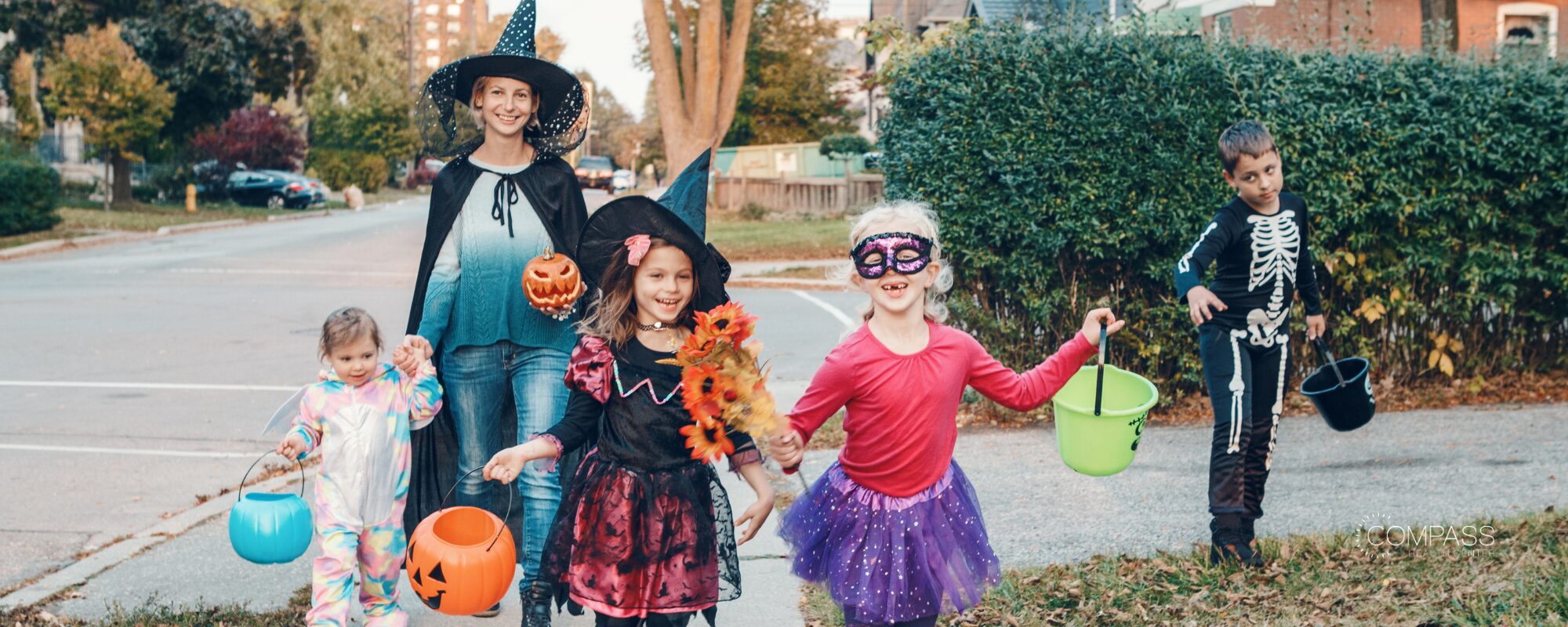
- Start small. A few houses is a complete outing.
- Build in breaks, whether that’s sitting on a bench, taking a breather in the car, or regrouping on a quiet corner.
- Agree on an exit signal, like a word, a card, or a hand squeeze.
- Say it out loud. Assure your child that they can say “I’m done” at any time.
- Plan a calm landing at home, complete with dim lights, comfy clothes, a favorite dinner, and a beloved TV show or movie.
Can Halloween Be Joyful for Neurodivergent Kids? Lean Into Special Interests
Halloween honors deep interests. A teen fascinated by horror film history, special effects makeup, or animatronics can pour that passion into building props or a wonderfully specific costume. Many people with autism describe freedom in being able to dress up: a chance to try on a character and a new social script without fear of standing out.
How Can Parents and Caregivers Manage Halloween Stress and Expectations?
You have permission to skip, shorten, or reinvent any tradition. Handing out candy from the porch, a soft-lit movie night, a pumpkin-carving afternoon, trick-or-treating at two houses, and then heading home: all of these count as Halloween, and all of them are a success.
A little communication goes a long way. You might let a few neighbors know your child may not speak or may need extra time at the door. If your child’s school has costume days or parades, ask ahead about options like wearing one costume piece instead of a full outfit, taking a quieter role, or getting a preview of the day’s schedule.
Your stress matters too. Caregivers often carry a child’s worries, siblings’ excitement, relatives’ expectations, and their own hopes for a perfect night all at once. Notice your limits, ask for help, and be gentle with yourself. A calm, regulated adult is one of the most soothing supports a child can have.
When Is Halloween Anxiety a Sign Your Child Needs More Support?
Some worry before a big, unpredictable celebration or event is expected. It may be worth a closer look if you notice:
- Anxiety that starts weeks early or lingers for a few days or more afterward, especially if it makes it hard to get through the day or affects sleep, eating, or school
- Meltdowns or shutdowns that become more frequent, longer, or more intense
- Avoidance that is shrinking your child’s world (or even your world), such as dropping activities they used to enjoy, wanting more time alone, or having a harder time separating from you
- Ongoing low mood, irritability, or withdrawal
- Sensory sensitivities that make everyday tasks, like getting dressed, brushing teeth, or eating, hard most days
These signs don’t mean something is wrong with your child. They may point to a broader pattern of anxiety, mood changes, or sensory needs, which often overlap and deserve more support.
At Compass Health Center, our programs look at the whole person. We address anxiety, mood, OCD, sensory-related concerns, and more together, with care that recognizes how often these conditions or symptoms occur side by side. If this season has raised questions, we’re here to help you sort through them.
What Does a Neurodivergent-Affirming Halloween Look Like?
A neurodivergent-affirming Halloween isn’t about changing your child or pushing them to tolerate more. It’s about flexibility: adjusting the costume, the route, the script, and the pace so your child can show up as themselves.
Success isn’t measured by how many houses you visit or how much candy ends up in the bucket. It’s measured by how safe, seen, and happy your child or teen felt. Sometimes that’s a full neighborhood loop. Sometimes it’s handing out candy in a favorite hoodie. Sometimes it’s staying home and doing a favorite activity. They all count.