
Proven Outcomes for Wisconsin’s Mental Health Needs
Specialized PHP and IOP programs for adolescents, young adults, and adults – delivering rapid access, collaborative care, and measurable results across Wisconsin.
When someone is struggling with their mental health, every day that they don’t receive adequate care impacts their long-term wellbeing. Early intervention matters. In Wisconsin, where families often face weeks or months of waiting for specialized treatment, Compass Health Center offers a different option, one where patients can begin care the same day or next day.
“We’ve designed Compass Health Center – Wisconsin to remove barriers to care that too many residents face,” says Sam Klinger, Executive Director, Strategy & Innovation. “Whether you’re a clinician referring a patient or a parent seeking help for your child, our goal is to get the right care started immediately. No long waitlists, no unnecessary delays.”
With virtual mental health programs available statewide today and a new Brookfield location opening mid-September, we’re expanding access to the communities that need it most.
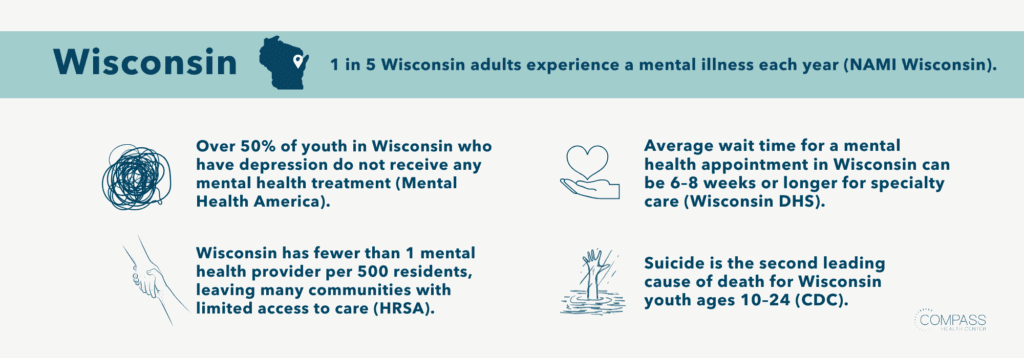
Local Mental Health by the Numbers – Wisconsin
Before opening our new Brookfield location, we looked closely at the current mental health landscape in Wisconsin. The reality is clear: demand for care is high, but access is often delayed. These statistics illustrate why Compass Health Center Wisconsin is focused on immediate access, measurable outcomes, and specialized programming for the patients and providers who need it most.
- 1 in 5 Wisconsin adults experience a mental illness each year (NAMI Wisconsin).
- Over 50% of youth in Wisconsin who have depression do not receive any mental health treatment (Mental Health America).
- Wisconsin has fewer than 1 mental health provider per 500 residents, leaving many communities with limited access to care (HRSA).
- Average wait time for a mental health appointment in Wisconsin can be 6–8 weeks or longer for specialty care (Wisconsin DHS).
- Suicide is the second leading cause of death for Wisconsin youth ages 10–24 (CDC).
“These numbers highlight why immediate access matters so much,” says Sam Klinger, Executive Director, Strategy & Innovation. “We can’t change the state’s provider shortage overnight, but we can build systems that make high-quality, specialized care available without the wait.”
Levels of Care at Compass Health Center Wisconsin
We offer two outpatient treatment options designed to bridge the gap between weekly therapy and inpatient hospitalization or an emergency room visit:
- Partial Hospitalization Program (PHP)
- Intensive Outpatient Program (IOP)
Age-specific programs are available for:
- Adolescents (ages 12–18)
- Young adults (ages 18–23)
- Adults (ages 23+)
These flexible, evidence-based programs allow patients to get the level of support they need while reducing the need for unnecessary hospitalization or maintaining daily responsibilities like school, work, and family care.
Conditions We Treat
Our clinical teams specialize in treating:
- Anxiety disorders
- Depression
- Obsessive-Compulsive Disorder (OCD)
- Trauma and PTSD
- School anxiety and refusal
“Our specialty programs for OCD, trauma, mood and anxiety, and school refusal are designed to address the unique challenges of each condition,” Klinger explains. “For example, our OCD program provides exposure and response prevention therapy – the gold standard treatment – five days a week, along with skill-based practice to help individuals gradually and confidently reduce their symptoms and regain control of their lives.”
How Compass Health Center Wisconsin Is Different
In many parts of Wisconsin, patients may wait weeks, or even months, to begin treatment. At Compass, we’ve built our systems to prioritize immediate access, so patients can begin treatment the same day or next day after a referral.
From day one, every patient meets with a psychiatric provider for a full evaluation and, if appropriate, medication management. This early intervention ensures that treatment is targeted and effective from the very start.
The Compass Care Model: Individualized and Collaborative
Our group-based, individualized care model combines the structure of evidence-based therapy with the flexibility to adapt to each patient’s needs.
Patients participate in a tailored rotation of:
- Core skill-building groups
- Experiential therapies
- Specialty groups (OCD, trauma, school refusal)
Each patient also receives:
- Weekly individual therapy with a primary therapist
- Family therapy (optional for adults) to strengthen support systems
- Ongoing psychiatric evaluation and medication management
“We design care around the individuals’ needs, instead of the other way around,” Klinger notes. “Our clinicians meet daily to review progress and adjust plans in real time. That adaptability is critical for lasting improvement.”
Communication with Referring Providers
We understand that continuity of care is essential for patient success. As a referring provider, you can expect:
- Regular progress updates from the patient’s primary therapist
- Collaborative discharge planning to ensure a smooth transition
- Access to our dedicated outreach team for program details or patient updates
“We want referring providers to feel like true partners in the care process,” Klinger says. “Our communication is intentional, consistent, and responsive from admission to discharge.”
Insurance and Financial Support
Our financial counseling team works directly with patients and families to explain benefits, confirm coverage, and navigate the financial side of care, removing another common barrier to timely treatment.
Measurable Outcomes That Guide Treatment
From admission through discharge, we use validated clinical measures to track each patient’s progress. These outcome measures:
- Monitor improvements in real time
- Inform clinical decision-making
- Confirm readiness for a lower level of care
On average, Compass patients experience a 50% reduction in anxiety and depression symptoms during their time in treatment.
“Data matters. Not just to demonstrate results, but to guide treatment every step of the way,” says Klinger. “It’s how we ensure patients are getting what they need, when they need it.”
Meeting Wisconsin’s Mental Health Needs, Today
Whether your patient needs targeted OCD treatment, a structured step-down after inpatient care, or a safe alternative to the ER, Compass Health Center Wisconsin delivers specialized mental health programs with immediate access, measurable outcomes, and a collaborative approach, supporting you and your patients every step of the way.
Ready to refer a patient?
In addition to virtual services currently offered across the state, in-person care in Brookfield begins September 22nd, 2025. Call us today at 877-552-6672 or submit a referral online to connect your patient with the care they need—without the wait.