How to Cope with Trauma and Stress During the Holidays
The holiday season often brings a mix of holiday stress, anxiety, and emotional intensity, especially for individuals navigating trauma. In this post, you’ll find an overview of how trauma can show up during the holidays, grounding and coping strategies you can use in the moment, and sensory, cognitive, and environmental tools to help you stay steady. You’ll also find guidance for setting boundaries, planning supportive alternatives, recognizing holiday stress in others, and offering meaningful support to loved ones. Finally, we outline when professional care may be helpful and how Compass’s trauma-informed programs can support you through the season.
How Trauma Shows Up During the Holidays
The weather is getting colder, holiday lights are starting to sparkle, and conversations about upcoming plans, or lack thereof, may already be filling your mind. For some, this brings excitement; for others, it stirs stress, grief, or a familiar pit in the stomach. All of those reactions are valid. Many people find this season difficult for a variety of reasons: complicated family dynamics, financial pressure, loneliness, or reminders of losses and past trauma. As we move into the holidays, the goal isn’t to force yourself into the Hallmark version we often see, rather to offer practical, compassionate ways to navigate this time with more steadiness, grounding, and support.
For many folks with a history of trauma, the holiday season can stir up reactions that feel confusing or intense. You might notice heightened emotional or physical responses: irritability, sadness, tension, hypervigilance, or exhaustion that doesn’t match the “holiday cheer” some may expect. Certain environments or people can act as triggers—family gatherings, old traditions, or conversations that bring up memories you’ve worked hard to move past.
This time of year also disrupts routines. The sun setting earlier, changes in sleeping and eating patterns, or daily structure can make coping feel harder. Layer on the pressure to appear cheerful or “be festive,” and it’s easy for guilt or self-judgment to creep in. These reactions are not personal failures; they are understandable responses shaped by past experiences, and they (and you!) deserve compassion, not criticism.
Building Your Holiday Grounding Plan: Strategies You Can Use in the Moment
There are ways to enter activating environments and feel more prepared, even if apprehension still lingers. These tools won’t eliminate difficult emotions but can reduce their intensity and support you in using skills aligned with your needs, choices, and values.
Sensory Strategies for Holiday Anxiety and Stress
Use the cold to your advantage. Stepping outside to feel crisp air, sipping cold water, or holding something chilled can help regulate your nervous system when it signals danger. Cold temperatures activate the vagus nerve and support a mind-body reset. Warm sensations—tea, hot cocoa, a heated blanket, or even a weighted blanket—can offer similar grounding.
Cognitive Strategies for Coping During the Holidays
Remind yourself that an overwhelming gathering or stressful conversation is temporary. Creating a grounding phrase or mantra can help you ride the wave. Try: “This is temporary,” “I’m uncomfortable but I am safe,” or “There is warmth and comfort waiting for me at home.” Gently anchor yourself to something supportive while validating your emotions.
Environmental Tools: Building Your Holiday Survival Kit
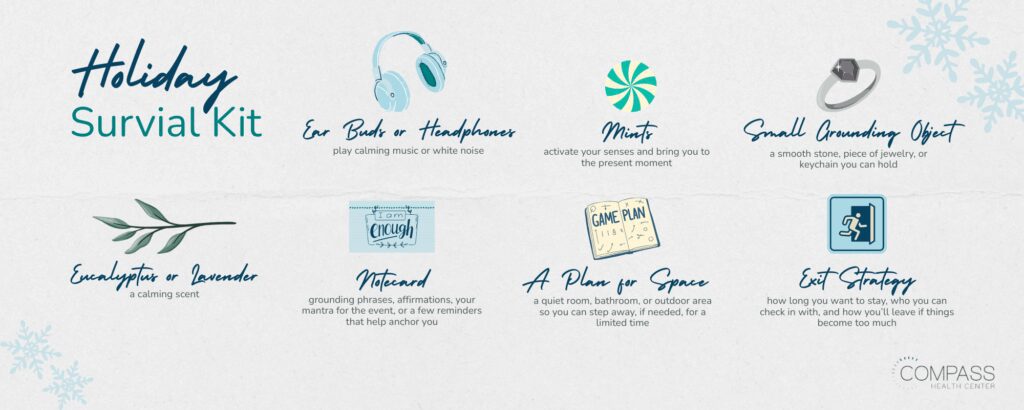
Build a small “Holiday Survival Kit” to keep in your bag, car, or coat pocket. This might include:
- Earbuds for calming music or white noise
- Peppermint gum or mints
- A grounding object
- A lavender or eucalyptus scent
- A notecard with grounding phrases or affirmations
- A plan for where to step away
- An exit strategy for when coping becomes too difficult
Your kit isn’t about avoidance. It’s about having tools for steadiness and care.
Coping Ahead: Setting Boundaries That Honor Your Needs
Communication and Boundary Setting During Holiday Stress
As you enter the holiday season, ask yourself what feels supportive and what feels draining. Prioritize what nourishes you and set limits around what depletes you. Communicate boundaries early, with clarity and kindness. Even with thoughtful communication, not everyone will respond well—and that’s okay. Your intention matters more than someone’s reaction.
Examples of Holiday Boundary Setting
Denying an invitation:
“Thank you so much for the invitation. Unfortunately, I won’t be able to make it. Wishing you a lovely holiday, and perhaps we can touch base in the new year.”
Compromising time:
“Thank you for the invitation! I’m looking forward to seeing you. I’ll only be able to attend from X to Y time. Please let me know if that disrupts the flow.”
Planning Alternatives That Support Your Coping
As you explore what feels supportive, consider preferred rituals in which you can anchor yourself:
- A quiet night with a favorite movie
- Cooking or picking up a comforting meal
- Holiday decorating
- A walk to look at lights or get a cocoa
These small rituals allow restorative connection. They offer closeness without pressure—brief check-ins, coffee with a friend, or a quick phone call. Try to limit comparison with others and shift back to what you need most.
Connection during the holidays doesn’t mean doing everything with everyone. Choose environments and people who feel safe, calming, and mutually supportive. This may include chosen family, trusted friends, pets, or community spaces. Reducing social pressure isn’t isolation—it’s regulation.

Supporting a Loved One Navigating Holiday Trauma
Perhaps you’re feeling grounded heading into the season, but someone you care about is struggling. It can be confusing to support someone when your own mindset doesn’t match theirs. Supporting a loved one facing holiday trauma often means offering presence, not solutions.
Ways You Can Help
Sit with them, listen, and validate what they feel without rushing or expecting them to move at a certain pace. When unsure what they need, ask gently: “What would feel supportive right now?” Avoid well-intentioned but dismissive phrases like “Just enjoy it,” “Don’t think about it,” or “They didn’t mean it.”
Noticing Holiday Stress in Others
Notice signs of distress—withdrawal, irritability, shutting down, or rising anxiety. Respond with steadiness: a calm tone, a grounding reminder, or an offer to step outside. Let them lead the way and ask whether they want a support plan or exit strategy. Your compassion may be one of the greatest gifts you offer.

When and How Professional Support Can Help
There are times when holiday stress, anxiety, or trauma reactions become overwhelming. Persistent or worsening symptoms—difficulty completing daily tasks, withdrawing from others, panic, or emotional overwhelm—are signals that additional support may help. These are not failures; they reflect a nervous system asking for more structure.
At Compass Health Center, our trauma-informed PHP and IOP programs provide a higher level of care when life feels heavy or destabilizing. Programs offer stabilization, evidence-based treatment, skills groups, opportunities for connection, and individualized support. Access is immediate, and the approach is grounded in compassion and empowerment.
As you navigate this season, remember there is no “right” way to feel. Your experience—joyful, complicated, heavy, or mixed—is valid. Move at your own pace, set boundaries, and lean into support when needed. Self-compassion is a grounding force.
If you need care, guidance, or a steadier place to land, Compass is here. You don’t have to move through the season alone, and reaching out is one of the most courageous steps you can take.