How Parents Can Support a Child with OCD: Expert Guidance and Practical Strategies
In this parent-focused OCD training, Beth Hope, LCSW, and Britt Teasdale speak with Chad T. Wetterneck, Ph.D., about how families can respond more effectively, reduce accommodation behaviors, and better support a child through treatment.
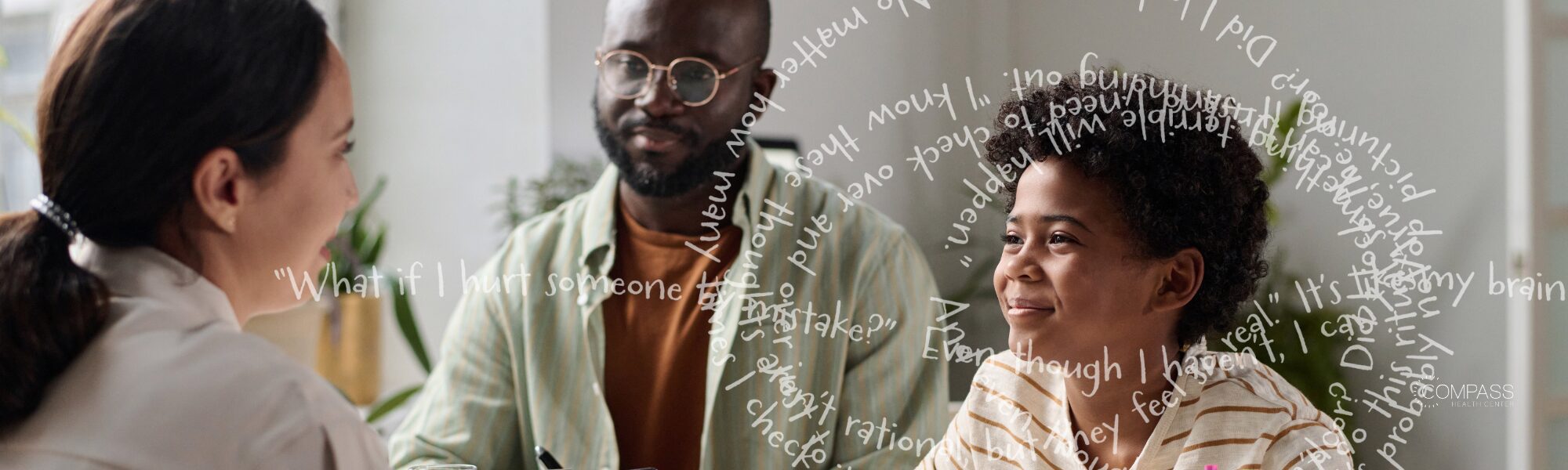
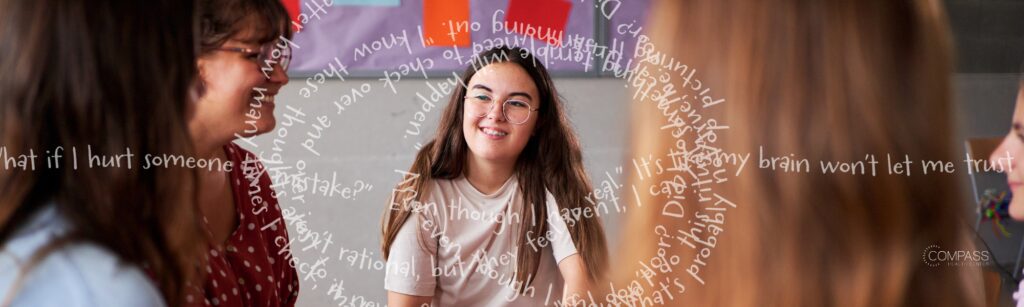
For parents, it can be heartbreaking to watch your child struggle with thoughts or behaviors that don’t seem to make sense—even to them. Repeated checking, counting, reassurance-seeking, and constant self-questioning are everyday realities for many children, teens, and young adults living with OCD. In this conversation, we’ll explore what OCD really is, how it shows up in daily life, and how parents can support their children using evidence-based strategies that lead to lasting relief.
In this parent-focused OCD training, Beth Hope, LCSW, and Britt Teasdale spoke with Chad T. Wetterneck, Ph.D.—a leading researcher, psychologist, OCD expert, and Senior Vice President of Clinical Development and Excellence at Compass Health Center—about the challenges families commonly face and strategies that can help children make meaningful progress in treatment. Together, they discuss accommodation behaviors, emotional regulation, and how parents can support their child’s OCD recovery while maintaining connection and trust.
Dr. Wetterneck has dedicated his career to helping people navigate OCD and anxiety with compassion, practical tools, and evidence-based treatment. Drawing from years of research and clinical experience treating patients across all age groups, Dr. Wetterneck offers valuable guidance for families who are noticing changes in their child’s behavior or exploring treatment options for OCD.
This interview has been lightly edited for grammar and clarity. The speaker’s original meaning and intent have not been changed.
Q&A
Britt Teasdale (BT): Could you help us define OCD? There are a lot of myths out there.
Chad T. Wetterneck, Ph.D. (CW): The word obsession used to mean you think about something a lot. Kids these days might say it’s “living rent-free” in your head. For most obsessions, when it comes to being an actual symptom of OCD, we would want to think about thoughts, images, or sometimes sensations that we consider to be unwanted. Most people will also do something in response to the thought, image, or feeling in an attempt to reduce that experience or avoid it altogether, which now brings us to compulsions.
Compulsions are actions that we might take. Some of them are observable behaviors, and some of them might be things we do internally or think about in our mind. And usually, the goal of those compulsive behaviors is to either reduce an unwanted experience, image, or sensation that we’re having in the moment, or to try to make sure that we don’t come in contact with it. When you combine those two things together at a level that occupies, on average, more than one hour a day in a given week and is interfering in important areas of your life, that’s what makes up a full diagnosis of obsessive-compulsive disorder.
BT: How does OCD specifically present itself in younger people, especially those who might not be able to really communicate what they’re feeling yet?
CW: Any of these symptoms that I talked about could come up even in children. Children may have a sense of what is appropriate or inappropriate, and they may not have the same types of thoughts that older kids or adults would have, but they could become hyper-fixated on those things, and it could really take them off their life course. I think that’s where you bring it back to kind of the more official definition about the amount of time someone is spending with these thoughts, even if you don’t know what the exact thoughts are, or certain types of ritualistic behavior.
Beth Hope (BH): How do parents know when they should seek help for a child exhibiting OCD behaviors?
CW: I think what you have to know as a caretaker or parent is that everyone has a level of tolerance for things, and everyone has their own unique behaviors and worries. When it comes to the identified child or adolescent, there really isn’t a wrong time to ask, “Should I take this person in and talk to an expert about this?”
If it’s happening the same day or a day or two later, maybe you’re jumping the gun a little bit. But if you can frame it by saying, “I’m taking you for a checkup, and you’re going to meet with someone who’s going to talk to you about some things,” that can help normalize the experience. If we can normalize going to therapy—not just to change things, but simply to get assessed—that’s really valuable.
BT: What if a parent’s child was newly diagnosed with OCD, and they’re wondering what caused it or if they did something wrong?
CW: For most mental health conditions, there is some amount of nature involved, and there’s some amount of nurture involved. What I mean by that is there’s a genetic component to most of the mental health conditions we’ve studied, and there’s usually some sort of environmental component as well.
As in the environment, I don’t mean that you got contaminated by something; it speaks more to how people react to what people are going through. As for the genetic component—and I think we’re seeing this more broadly with anxiety disorders—the more people in your family tree that have anxiety disorders, the more likely you’re going to be a little bit more predisposed for that likelihood. It doesn’t mean you are going to develop an anxiety disorder, or OCD for that matter.
I think most of them I would categorize as loving behaviors of trying to keep their kids safe from a lot of negative, unwanted experiences. Sometimes that’s done to such a great degree that we actually teach them that you can avoid a lot of things, and so that should be our focus in life: not to get new experiences, not to get used to emotions, not to challenge ourselves. And I think, for someone that’s already then met OCD as a diagnosis, we need to take some steps back from that.
BT: Can you discuss Exposure and Response Prevention Therapy (ERP), the gold standard OCD treatment that we use at Compass?
CW: ERP involves two main components. The first is the idea that in order to change your relationship with that fear and anxiety that you’re experiencing or trying to avoid, we need to experience it. We need to encounter it in a way that’s different, one that would be, even if it is quite frightening for the person, with a level of willingness to actually encounter that.
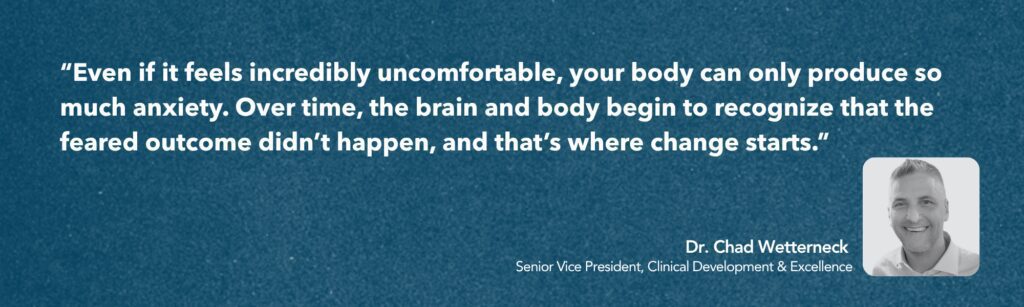
What we’ve learned is that most people think that they’re going to be overcome by anxiety or the other unwanted negative affect—that it will just keep building and building and building. But your body maxes out in terms of how much anxiety it produces. If we could measure that, and we said on a scale of one to 100, how much anxiety do you feel? It stops at 100.
Now, that’s incredibly uncomfortable. And if you ask most people with OCD, if you were to expose them to something and not avoid it, they will probably tell you it goes to 120, or a thousand, or some other number that doesn’t exist on our scale. But one thing that we know is that our body and mind connect in such a way that, when time passes and the fear that we have hasn’t materialized, at some point our mind and body recognize that. And at some point, the fear will start to diminish on its own, as long as we’re not interfering with that new learning process.
BT: How do we get buy-in from younger children in our program in terms of doing something so scary?
CW: How many kids get their first shot at age one, two, three, four, five and say, “This is a good thing. I’m really happy that this is going to prevent something by getting a vaccine or something else”? It’s almost nobody.
So how that affects treatment is, sometimes we have to make sure that the people who are living with children and adolescents must become therapists themselves. And I don’t mean that literally they have to get a degree in it and get licensed, but they have to understand the therapy well enough to make sure they’re not inadvertently reinforcing symptoms and that they’re actually challenging their children and adolescents to engage more in exposure practices.
Even if it means I need to structure our family life differently so that I’m not accommodating your desire to not have any knives at all in the house, or to not eat any red meat or chicken, or whatever it might be. So that’s going to happen earlier in life more often than later in life or in adulthood, but it still does happen sometimes in adulthood as well.
BT: What do you say to parents who are feeling a lot of guilt, whether it’s around how they’ve reacted to their child in certain situations or feel they waited too long to seek treatment for their child?
CW: First, I’d ask them to think about their relationship with guilt. Is this the first time they’ve ever felt guilty? Usually, the answer is no. It might feel like a stronger type, or maybe the worst type of guilt, but at the same time, guilt also can pass if you don’t over-attend to it. So that’s not the only solution to it.
If you lifted weights for the first time and you were sore afterwards, and you stopped lifting weights, you’d probably avoid doing that in the future. But if you want to get stronger, you would keep lifting, and you’d keep lifting in a way with the guidance of someone that knows about developing muscle. And eventually, you’d probably feel good about yourself, you’d feel healthy, you’d be able to lift boxes over your head—all these positives—but it took effort. And in this case, it’s an emotional effort on your part as a parent or caretaker.
BH: Talk a little bit about how families can know when medication would be helpful as an OCD treatment.
CW: The way I look at this is, if you haven’t had any treatment for OCD before, you may not need medication at all. But I think it would be important to recognize that medication by itself can be helpful. And if you learn the skills in therapy to address your symptoms, that’s going to be something that you’re going to learn and take with you for the rest of your life. If you ever want to remember it and start doing exposure work again, or some other validated treatment through psychotherapy, you know those skills.
You’ve made it work before; you can make it work again. And if you decide to take medication, it doesn’t mean you will need medication for the rest of your life.
BT: What do PHP and IOP look like for OCD treatment for a child and their family?
CW: Intensive outpatient programs, like at Compass Health Center, entail treatment five days a week, about three hours a day. Our partial programs are five days a week, five and a half hours a day for OCD. What you’re usually going to see at those levels of care will be anywhere between a third to two-thirds of your time spent each day recognizing various exposures that you could do and participating in those exposures.
One thing, besides doing something that’s an evidence-based treatment that we know works—and we have the data to show that our programs are very effective for this—part of what works is that people are dedicating a significant amount of their life to it. We don’t normally talk about children having jobs, and not many adolescents either sometimes, but they’re putting in the time to say, “This is so important that I actually need to focus on this and have a supportive environment around me that can point out things that I might not notice or help me challenge things when I’m not sure if I can challenge them.”
And the repetition that you see in doing exposure work—recognizing the struggle, taking a step back from it, not engaging in rituals or avoidance—it becomes more of a habit, especially the more you notice the habituation process.
BT: Do you often hear from parents that they’re having a hard time changing their own behavior at home? How does Compass support parents and caregivers through the changes that they need to make for treatment to be effective?
CW: We really help this process in our levels of care by having regular family therapy or loved-ones therapy as a component of our treatment. This gives us an opportunity every other week or once a week, to meet with the family, oftentimes with their child or adolescent present. There’ll be some time oftentimes spent just with a caretaker or parent so that they can voice their concerns without voicing them in front of their loved one, because of course they’re doubting whether they’re doing the right thing as a parent.
And we want to make sure that they know this is a skill they have to learn as well. So many times, a lot of their needs can be met during family therapy and contact with our individual therapists. And for other people, we might direct them to other resources. There’s a large OCD community, and oftentimes we would direct them to a place like the International OCD Foundation. There’s a lot of information out there, but they also have recommendations for things like support groups. Many of these are virtual, and people are able to talk with others while experiencing the same thing.
BT: How does being able to name what the child is experiencing help the family and the child themselves?
CW: Once we start identifying what the actual problem is and can give a name to it, then that allows us to start moving forward and finding the right treatments for it. There are some things that we do in our programming that expose people to some basic mental health understanding, so kids and adolescents are going to learn in general—not just about OCD, but about emotions in general.
That’s a really nice thing that we do at Compass Health Center is we expose people to not just the strongest evidence-based treatment one can get for OCD, but also give them practice in other important developmental psychosocial functioning, so that as they’re reducing their symptoms, we’re teaching them how to engage in life as well.
BT: What’s one reminder you wish families, parents, caregivers, could carry them throughout?
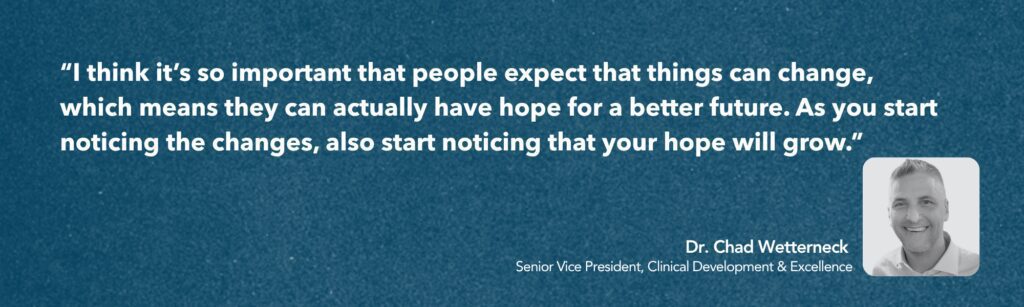
CW: Depending on their previous association views on things like therapy, if they can remember that getting a diagnosis is often the first step toward help, there is help available, there are experts out there, and those experts really do know how to help your child and your family through this process. I think it’s so important that people expect that things can change, which means they can actually have hope for a better future. I know that hope is out there; sometimes you just need to engage in the process. And as you start noticing the changes, also start noticing that your hope will grow.

Bios
Chad T. Wetterneck, Ph.D., is the Senior Vice President of Compass Health Center’s Clinical Development & Excellence. Dr. Wetterneck is a faculty member for the International Obsessive Compulsive Disorder (OCD) Foundation’s Behavioral Therapy Training Institute (BTTI) and has been a distinguished leader in the fields of OCD and trauma treatment and is a certified trainer in Functional Analytic Psychotherapy. He is widely recognized as a leading expert in researching and treating complex mental health conditions in adolescents and adults, with a focus on serving multicultural and diverse populations.
Beth Hope, LCSW, is a clinician, parent, and advocate whose career has focused on supporting children, adolescents, and families through some of life’s most challenging seasons. With more than two decades of experience across residential care, child welfare, and intensive outpatient treatment, she brings both clinical expertise and lived perspective as the parent of a tween and a teen. Since joining Compass Health Center nearly ten years ago, Beth has served as both a clinician and program leader, helping to expand adolescent services and strengthen the organization’s family-centered approach to care.
Britt Teasdale is a writer, photographer, and creative strategist. As Associate Director of Brand Management & Content at Compass Health Center, she has spent nearly a decade shaping narratives that translate complex clinical ideas into stories that resonate, reduce stigma, and help families access care. She holds an MFA in Creative Nonfiction Writing and began her career in journalism. She co-hosts Compass’s podcast, You Only Know What You Know.