Ages 18-23

Young Adulthood: In-Between Levels of Care, for the In-Between Years

Young adulthood can feel like standing in the middle of everything. You’re technically an adult, but still figuring out how to manage independence, work or school, money, relationships, and who you want to be in the world. There’s pressure to keep moving forward, even when you don’t feel steady or sure of the next step. Our Young Adult Programs are designed for individuals who need more support than weekly therapy but do not require hospitalization, as well as those stepping down from inpatient care.
Start the conversation
Why Treatment Length Matters

Support That Fits the Realities of Young Adulthood—Without Pressing Pause

Young adults are navigating more than symptoms. They’re navigating life transitions. Our psychiatrist-led Hospitalization (PHP) and Intensive Outpatient (IOP) programs are built to meet young adults where they are—developmentally, emotionally, and practically. We provide immediate access to evidence-based treatment for OCD, trauma, depression, anxiety, and co-occurring substance use that helps young adults regain stability, clarity, and momentum without putting life completely on hold. Treatment focuses on helping young adults:
Stay engaged in school, work, and daily life:
Care is structured to integrate with college schedules, jobs, and real-world responsibilities.
Understand what’s happening beneath the surface:

We help patients make sense of patterns, triggers, and emotional responses with curiosity rather than self-criticism.
Build emotional regulation and resilience:
Skills that support anxiety management, mood stability, and tolerance for uncertainty, which are essential tools at this life stage.
Strengthen communication and independence:
From setting boundaries to advocating for themselves, young adults gain practical relational and decision-making skills.
Enhance communication and interpersonal skills:
Strong relationships support better mental health outcomes. Our program helps strengthen communication skills to improve connection with the people closest to you.
Reduce the risk of escalation or hospitalization:
Early, integrated care helps prevent crises and supports a confident return to outpatient treatment.

When Weekly Therapy Isn’t Enough

You're Not the Only One

For many young adults, the idea of a “higher level of care” can feel intimidating. Terms like Partial Hospitalization (PHP) and Intensive Outpatient (IOP) can sound more daunting than the care itself often feels in practice.

These programs are designed to offer structured, consistent support—without inpatient hospitalization. With no waiting lists, same- or next-day assessments, and coordinated care that can include families, schools, and outpatient providers, PHP and IOP provide a more connected level of care when weekly therapy isn’t enough.

Ages 18-23

Mood & Anxiety Program

Learn More

Depression and anxiety often show up differently in young adulthood, sometimes intertwined with life transitions, burnout, social pressure, and identity development.

This program is designed through a developmentally attuned lens, recognizing how symptoms intersect with work, classes, independence, relationships, and life transitions.

  • Daily group therapy
  • Individual therapy and psychiatry
  • Skills for anxiety, mood instability, intrusive thoughts, social stress, and burnout
  • Support with routines, executive functioning, and transitions
  • Optional family involvement, guided by the young adult’s preferences

  • Psychiatric assessment and medication management
  • Cognitive Behavioral Therapy (CBT)
  • Dialectical Behavior Therapy (DBT)
  • Acceptance and Commitment Therapy (ACT)
  • Mindfulness*
  • Individual therapy
  • Group therapy
  • Family therapy
  • Art therapy*


*Not available at all locations

PHP
IOP

Ages 18-23

OCD & Anxiety Treatment

Learn More

For young adults who are struggling with obsessive thoughts, compulsive behaviors, excessive doubt, or intolerance of uncertainty, generalized therapy often isn’t enough.

This program offers specialized, evidence-based treatment for OCD and anxiety disorders using daily Exposure and Response Prevention (ERP), delivered in a way that respects values, identity, and autonomy.

  • Daily ERP therapy
  • Individual therapy and psychiatry
  • Feeling more capable at school and work
  • Spending less time caught in compulsions and rituals
  • Learning to tolerate uncertainty and stay engaged in daily life
  • Becoming more comfortable with uncertainty
  • Building stronger, more meaningful relationships
  • Optional family involvement, guided by the young adult’s preferences

  • Psychiatric assessment and medication management
  • Daily Exposure and Response Prevention (ERP) Therapy
  • Habit Reversal Therapy (HRT)
  • Cognitive Behavioral Therapy (CBT)
  • Dialectical Behavior Therapy (DBT)
  • Acceptance and Commitment Therapy (ACT)
  • Mindfulness*
  • Individual therapy
  • Group therapy
  • Family therapy
  • Art therapy*


*Not available at all locations

PHP
IOP

Ages 13-18

Trauma & PTSD Treatment

Learn More

Trauma during childhood, adolescence, or early adulthood can quietly shape how young people relate to themselves, others, and the future.

Our specialized program helps young adults understand how trauma lives in the body and nervous system, and develop skills for regulation, safety, and reconnection.

  • Cognitive Processing Therapy (CPT)
  • Trauma-informed CBT and ACT
  • Emotion regulation and grounding skills
  • Psychiatric support for trauma-related symptoms
  • Careful pacing that respects readiness and autonomy
  • Integrate care for co-occurring challenges, including OCD, depression, anxiety, and substance use

  • Psychiatric assessment and medication management
  • Cognitive Behavioral Therapy (CBT)
  • Dialectical Behavior Therapy (DBT)
  • Acceptance and Commitment Therapy (ACT)
  • Mindfulness*
  • Individual therapy
  • Group therapy
  • Family therapy
  • Art therapy*


*Not available at all locations

PHP
IOP

Ages 18-23

Mental Health, Chronic Pain, and Illness Program

Learn More

For many young adults living with chronic pain or illness, mental health challenges are often part of a much larger picture. Physical symptoms, ongoing medical care, and conditions like autoimmune disorders, migraines, GI issues, long COVID, or cancer treatment can all shape how mental health is experienced—and how difficult daily life can become.

This program is designed for young adults carrying the emotional and psychological impact of living in a body that does not always cooperate, whether symptoms are long-standing, treatment-related, or part of a difficult recovery process.

  • Manage anxiety, depression, or mood changes related to illness, pain, or medical treatment
  • Reduce the mental burden of pain, fatigue, uncertainty, and side effects
  • Rebuild routines when symptoms or treatment demands fluctuate
  • Address grief related to changes in health, function, identity, or independence
  • Strengthen self-trust and agency in medical, personal, and life decisions

  • Psychiatric assessment and medication management
  • Cognitive Behavioral Therapy (CBT)
  • Dialectical Behavior Therapy (DBT)
  • Acceptance and Commitment Therapy (ACT)
  • Mindfulness-Based Stress Reduction (MBSR)
  • Mindfulness*
  • Individual therapy
  • Group therapy
  • Family therapy
  • Art therapy*


*Not available at all locations

PHP
IOP

Ages 18-23

Mental Health & Substance Use Program

Learn More

Substance use in young adulthood often exists alongside anxiety, depression, trauma, or emotional dysregulation—not apart from it. It's not either/or. It's both/and.

Our Mental Health & Substance Use Program is built for young adults whose mental health and substance use are closely connected. By addressing both at the same time, treatment reflects how these challenges show up in real life and supports more lasting progress.

  • Understanding how substances function in their emotional world
  • Reducing reliance on substances as a coping strategy
  • Building alternative skills for stress, discomfort, and distress
  • Stabilizing mood and mental health symptoms
  • Strengthening motivation, insight, and follow-through
  • Services are delivered by a multidisciplinary team of psychiatrists, licensed clinicians, nurses, and Certified Alcohol and Drug Counselors (CADCs).
  • Developing a relationship with substances that aligns with personal values and goals

  • Psychiatric assessment and medication management
  • Motivational Interviewing, relapse-prevention strategies, and medication-assisted treatment when appropriate
  • Cognitive Behavioral Therapy (CBT)
  • Dialectical Behavior Therapy (DBT)
  • Acceptance and Commitment Therapy (ACT)
  • Mindfulness*
  • Individual therapy
  • Group therapy
  • Family therapy
  • Art therapy*
  • Care is guided by flexible treatment goals, including harm reduction and abstinence


*Not available at all locations

PHP
IOP

Ages 18-23

College Preparedness Program

Learn More

For students preparing to return to college or considering a return after taking time away for mental health support, this seasonal program offers a supportive bridge between treatment and the realities of campus life. With structured days, academic planning, and continued clinical care, students can rebuild routines, confidence, and readiness for the demands of school.

  • Building sustainable routines and structure
  • Executive functioning and time management
  • Anxiety around academic performance and social reintegration
  • Transition planning and coordination with schools
  • Confidence returning to independence

  • Cognitive Behavioral Therapy (CBT)
  • Dialectical Behavior Therapy (DBT)
  • Acceptance & Commitment Therapy (ACT)
  • Motivational Interviewing (MI)
  • Mindfulness
  • Psychiatric assessment and medication management
  • Individual, group, and family therapy
  • Parent/caregiver support


*Not available at all locations

PHP
IOP

Virtual PHP and IOP for Young Adults

High-quality, specialized care—wherever you are


Our Virtual Young Adult PHP and IOP programs are designed specifically for how young adults learn, communicate, and engage.

Virtual care includes:

• Daytime, afternoon, and evening scheduling options
• Psychiatrist-led medication management within 24–48 hours
• Skills focused on real-world application
• Outcomes comparable to in-person treatment

Available in Illinois, Maryland, Minnesota, Wisconsin, Virginia, and Washington, D.C.
Schedule an Appointment

Why Young Adults and Families Choose Compass

• Care that starts when it’s needed, meeting young adults where they are, not where they are expected to be

• Developmentally attuned treatment that understands identity, independence, and pressure without rushing growth

• Integrated psychiatry, therapy, and skills-based care that work together, so treatment feels cohesive rather than fragmented

• Respect for autonomy, with support that builds confidence instead of taking control away

• Consistency and continuity of care, so progress holds even when symptoms shift, or life gets complicated

Schedule an Appointment

Skills That Actually Help: Behavioral Therapy for Young Adults

Young adulthood is a time of momentum and uncertainty. There is pressure to keep moving forward, even while identity, independence, and direction are still taking shape. Our Young Adult Programs are designed to meet people in this in-between, with care that feels relevant, respectful, and grounded in real life.

Treatment is built on evidence-based approaches and delivered by clinicians who specialize in working with ages 18–23. Our team understands the layered pressures of this stage, including academic or early career demands, changing relationships, and the shift toward greater independence. Care is designed to support young adults as they build skills and confidence, while also helping the people who care about them better understand how to be supportive in sustainable ways. Through psychiatrist-led PHP and IOP programs, young adults receive structured, coordinated care that supports stability without pulling them out of their lives. With patient consent, families can be thoughtfully involved through education, communication, and guidance, so support extends beyond the treatment setting without compromising autonomy.

The goal is not perfection. It is confidence and the ability to move forward with practical skills, stronger self-trust, and clearer alignment with what matters, long after treatment ends.
Schedule an Appointment

Our Treatment Approach and Methodologies

When anxiety, depression, or focus struggles make daily life feel overwhelming, it doesn’t mean you’re failing. It means you’re carrying a lot—often caught between what’s already happened and what comes next. Our programs offer evidence-based care for young adults, grounded in research and shaped by real life.

ERP is one of the most effective treatments for Obsessive Compulsive Disorder (OCD) and other complex anxiety diagnoses, including Illness Anxiety Disorder, Panic Disorder, Social Anxiety Disorder, and other anxiety disorders. Patients gradually confront their feared object or situation in a hierarchical, prolonged, and planned manner. By doing so, patients learn to gain mastery over their anxiety and fears.

CPT addresses “stuck points” (trauma-centered cognitive distortions) via applying cognitive-behavioral techniques, such as Socratic dialogue, challenging questions, and collaborative identification of common thinking errors. These interventions aid patients’ trauma recovery processes, allowing for more flexible thinking and the development of new, balanced beliefs.

ACT is an evidence-based therapeutic model that combines behavior modification interventions with specific types of acceptance and mindfulness exercises. ACT aims to change a person’s relationship with their own troubling thoughts, whether it is ruminating on past mistakes, focusing on potential threats in the future, or feeling overwhelmed by traumatic memories. In changing how a person thinks about and responds to these troubling thoughts, that person frees themselves up to live a value-based, rich, full, and meaningful life. Since there is no manualized protocol for ACT, Compass adapts tools to meet patients and groups where they are at in their treatment journey. These tools assist patients in making room for their emotional experiences and to have space to focus on identifying and doing what is most important to them.

CBT is an evidence-based, present-focused, structured, and time-sensitive therapy proven effective by thousands of studies over decades for many physical and mental health concerns. CBT centers around the interconnectedness of a person’s thoughts, emotions, behaviors, and physiological responses. CBT posits that the way one perceives and reacts to a situation causes them the most distress, rather than the situation itself. CBT offers skills to reduce distress by helping individuals identify distorted thinking patterns, evaluate their effectiveness, and reframe thinking to more realistic and helpful thoughts. CBT focuses on building awareness of what an individual experiences in the here and now and then problem-solve using this insight to create change in thinking patterns and behaviors using this increased insight and specific coping skills.

DBT is an evidence-based model of treatment designed by Dr. Marsha Linehan to help patients build meaningful lives and improve their ability to regulate emotions. DBT guides patients through identifying patterns in thinking, behavior, emotions, and interpersonal interactions that contribute to problems in living. Once identified, the goal is to change these patterns using coping skills. The “D” in DBT refers to dialectics, the presence or co-occurrence of two seemingly contradictory or opposing concepts simultaneously. DBT centers on the dialectic of acceptance and change and encourages individuals to walk the middle path between the two, working to balance acceptance (“I’m doing the best I can,” “this is how things are right now”) and change (“I need to try different for things to be different”). DBT comprises four central tenets to help people accept and change: Mindfulness, Distress Tolerance, Interpersonal Effectiveness, and Emotion Regulation.

Motivational Interviewing is a therapeutic technique that helps individuals bridge the gap between their current behavioral choices and their identified goals. The four tenets of Motivational Interviewing (MI) are facilitating engagement, focusing on goals, evoking awareness and motivation, and planning for reasonable steps to move toward helpful goals. Open-ended questions, validation, reflective listening, and summarizing are helpful tools to guide these steps.

Mindfulness is a term used in various ways based on setting and context. DBT defines Mindfulness as “the act of consciously focusing the mind in the present moment without judgment and attachment to the moment.” Mindfulness is active—it is something all people can engage in, actively choose to do, and can develop into practice with repeated effort. Most Mindfulness activities and tools, including the DBT Mindfulness skills, are adapted from cultural and spiritual traditions like meditation and breathwork. DBT Mindfulness skills help individuals practice being fully present in the moment, tuning in to what is happening inside and around them, and moving forward aligned with inner wisdom.

Emotion regulation refers to adjusting or modulating one’s emotions. The phrase “Emotion Regulation” is a DBT term that denotes a set of skills designed to help individuals both increase resilience to intense emotions and decrease suffering related to emotions. These skills are not designed to “eliminate” or “avoid” emotions, but rather to help individuals identify and express emotions, alter their responses to their emotions, shift the emotions they are experiencing and/or the intensity of their emotions, and navigate difficult to sit with emotions safely and effectively.

Distress tolerance refers to sitting with experiences of distress (distressing thoughts, emotions, urges, and/or physiological responses). In DBT, distress tolerance refers to specific skills designed to help individuals navigate crisis moments as effectively as possible. These skills focus on guiding individuals through radically accepting the situation as it is and, at the same time, working to change what they can. DBT Distress Tolerance skills support individuals in skillfully moving through distressing realities without increasing their suffering.

Interpersonal effectiveness refers to constructive communication. The phrase “Interpersonal Effectiveness” is a DBT term that denotes a set of skills designed to help individuals manage challenging situations, validate the emotions and experience of self and others, improve and maintain current connections, and create new meaningful relationships. Interpersonal Effectiveness skills offer concrete guidance and support around balancing acceptance and change within relationships, asserting wants and needs in effective ways that maintain the relationship, and navigating complex situations in values-aligned ways.

Executive functioning skills are mental skills that allow a person to organize, plan, and follow instructions, think flexibly, and demonstrate impulse control. These skills are utilized daily as individuals prioritize tasks, achieve goals, and learn. Executive function challenges can make it hard to focus, follow directions, and regulate emotions. Executive function skills are learned; patients benefit from modeling and explicit teaching.

Art therapy is a specific type of experiential therapy that engages individuals in art-making and creative expression to explore internal experiences, build insight, and learn and apply skills related to treatment goals. Art therapy is a therapeutic intervention led by professionally trained art therapists with specific educational and practical experiences. At Compass, art therapy is integrated into programming in age-specific, values-aligned, and skills-focused ways.

Our Impact

We understand that success can look different for everyone depending on your hopes and needs. Here are some ways we are making an impact:

97%

begin treatment the same or next day

95%

step down to a lower level of care after completion

90%

do not require higher levels of care for 12+ months

99%

would refer a peer or family member

Helpful Reads and Resources
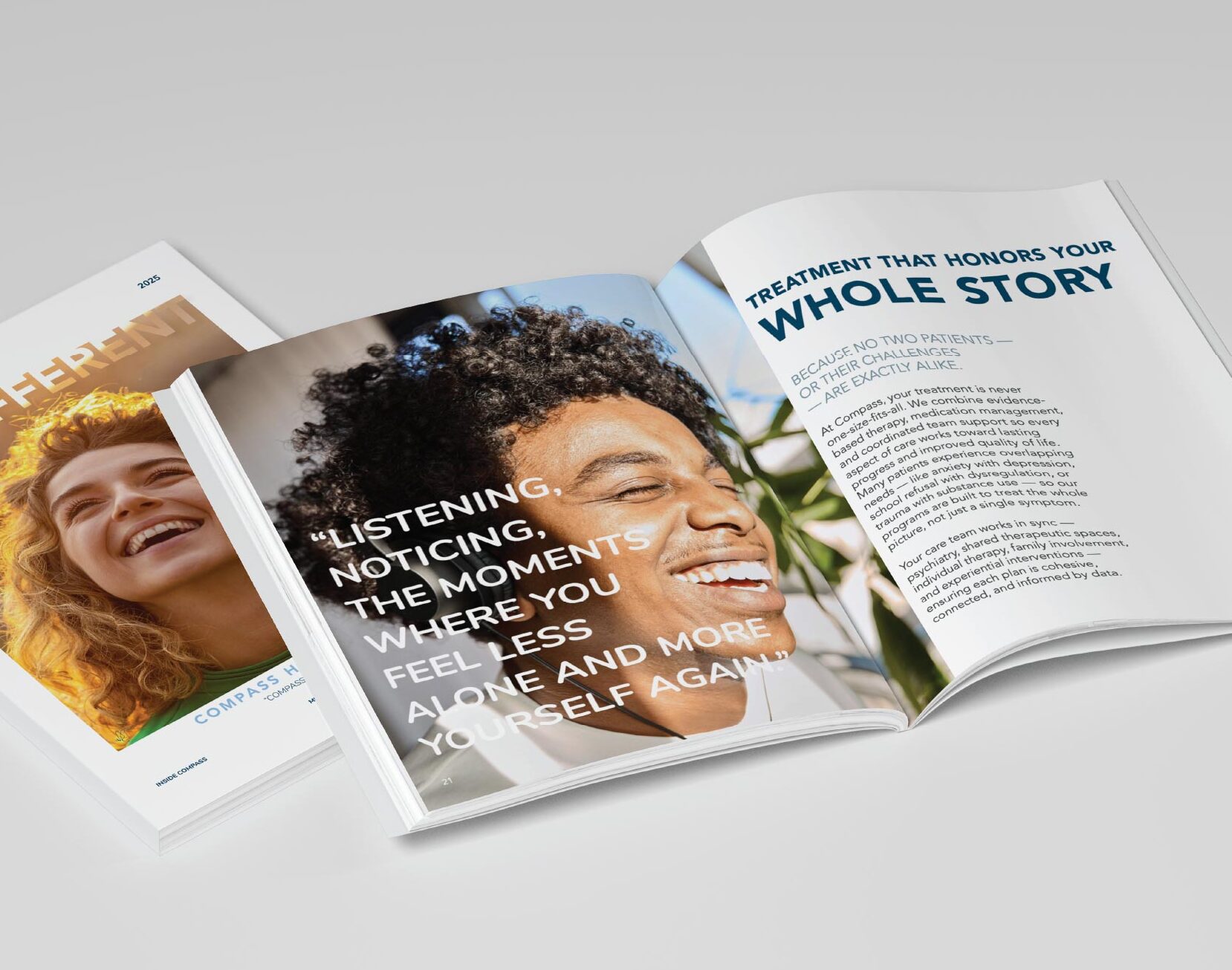
Forward: The Compass Lookbook

When you can see how care actually works—and what it feels like—it’s easier to take the first step. Forward offers a clear look at our approach and philosophies, so nothing feels unfamiliar before you begin.
Learn More

Insurance & Billing Support

A dedicated Patient Advocate helps you understand coverage, costs, and next steps, so logistics don’t become another barrier to care.
Learn More

Young Adult & Family Guide


A straightforward guide to what to expect, from intake through the first day of treatment, with optional resources for families who want to stay informed and supportive.
Learn More

Contact Us

Get in Touch